 Chicago Business Attorney Blog


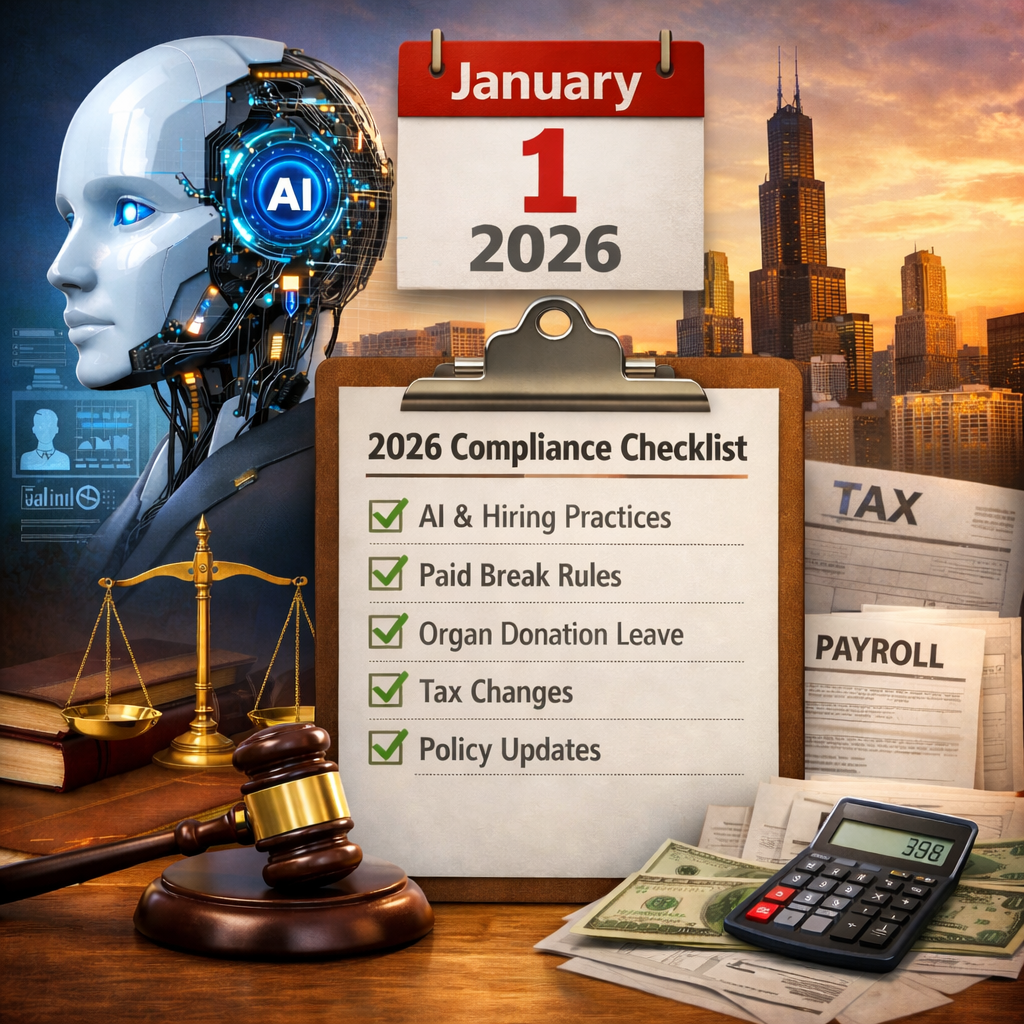 For Chicago-area business owners, January 1, 2026 is shaping up to be a deceptively important date. There is no single headline-grabbing law taking effect. Instead, several Illinois and federal changes arrive at once, quietly affecting hiring practices, payroll, employee benefits, business expenses, and tax planning. These are exactly the kinds of changes that tend to create problems when they are discovered too late.
One of the most significant developments involves the use of artificial intelligence in employment decisions. Beginning January 1, 2026, Illinois law treats misuse of AI in employment as a potential civil rights violation. Employers using AI tools for recruiting, resume screening, interview scoring, scheduling, performance evaluations, or similar decisions must ensure those tools do not produce discriminatory results. The focus is on outcomes, not intent. Even well-meaning employers can face exposure if automated systems disproportionately affect protected classes. The law also requires notice to employees when AI is used in covered employment decisions, making it important to understand how HR software actually functions.
Another change affects payroll practices for nursing mothers. Illinois now requires that
reasonable break time to express breast milk be paid time. Employers may no longer require employees to clock out or use paid time off. Many employers already comply in practice, but payroll systems, handbooks, and supervisor training should be reviewed to ensure full compliance.
Illinois has also expanded organ donation leave protections to include part-time employees. Employers that previously limited this leave to full-time staff will need to update policies and train managers to avoid automatic denials.
At the same time, Illinois continues to refine rules governing confidentiality provisions, workplace agreements, and employee protections. Older employment agreements, separation agreements, and handbook language may no longer be enforceable as written. Businesses relying on templates or legacy documents should be cautious, as a single outdated clause can create legal exposure.
From an operational standpoint, Illinois eliminates the state-level one percent grocery tax as of January 1, 2026. However, municipalities may impose local grocery taxes. For businesses selling qualifying grocery items, this creates complexity rather than simplicity. Point-of-sale systems and tax settings may need location-specific adjustments.
Federal tax law also changes the treatment of employer-provided meals. Beginning in 2026, many meals that were previously fifty percent deductible will no longer be deductible at all, including certain on-premises meals provided for the convenience of the employer. While meals are still permitted, their after-tax cost increases, which may affect budgeting and compensation strategies.
Some changes affect owners personally, particularly in closely held businesses. The loss of meal deductions can influence compensation planning, while expanded federal employer-provided childcare credits may present opportunities for certain small businesses, depending on structure and eligibility.
The takeaway for Illinois businesses is straightforward: January 1, 2026 is a planning deadline, not just a calendar date. Reviewing employment practices, payroll procedures, HR technology, and tax treatment now can prevent far more costly corrections later.
2026 Compliance Checkpoints for Illinois Employers
Employment Practices
- Review all AI and automated tools used in hiring, scheduling, evaluations, or discipline
- Confirm employee notice requirements for AI-assisted decisions
- Assess potential disparate impact from automated systems
Payroll and Leave Policies
- Update policies to reflect paid nursing-mother break requirements
- Confirm payroll systems properly compensate required breaks
- Expand organ donation leave policies to include part-time employees
Employment Agreements and Handbooks
- Review confidentiality and non-disclosure provisions
- Audit separation agreements for enforceability under current Illinois law
- Update handbooks to remove outdated or conflicting language
- Operational and Tax Issues
- Update point-of-sale systems for grocery tax changes by municipality
- Review accounting treatment of employer-provided meals
- Confirm payroll withholding procedures reflect current federal guidance
- Owner Planning
- Reassess compensation and benefit strategies affected by meal deductions
- Evaluate eligibility for expanded employer-provided childcare credits