 Chicago Business Attorney Blog


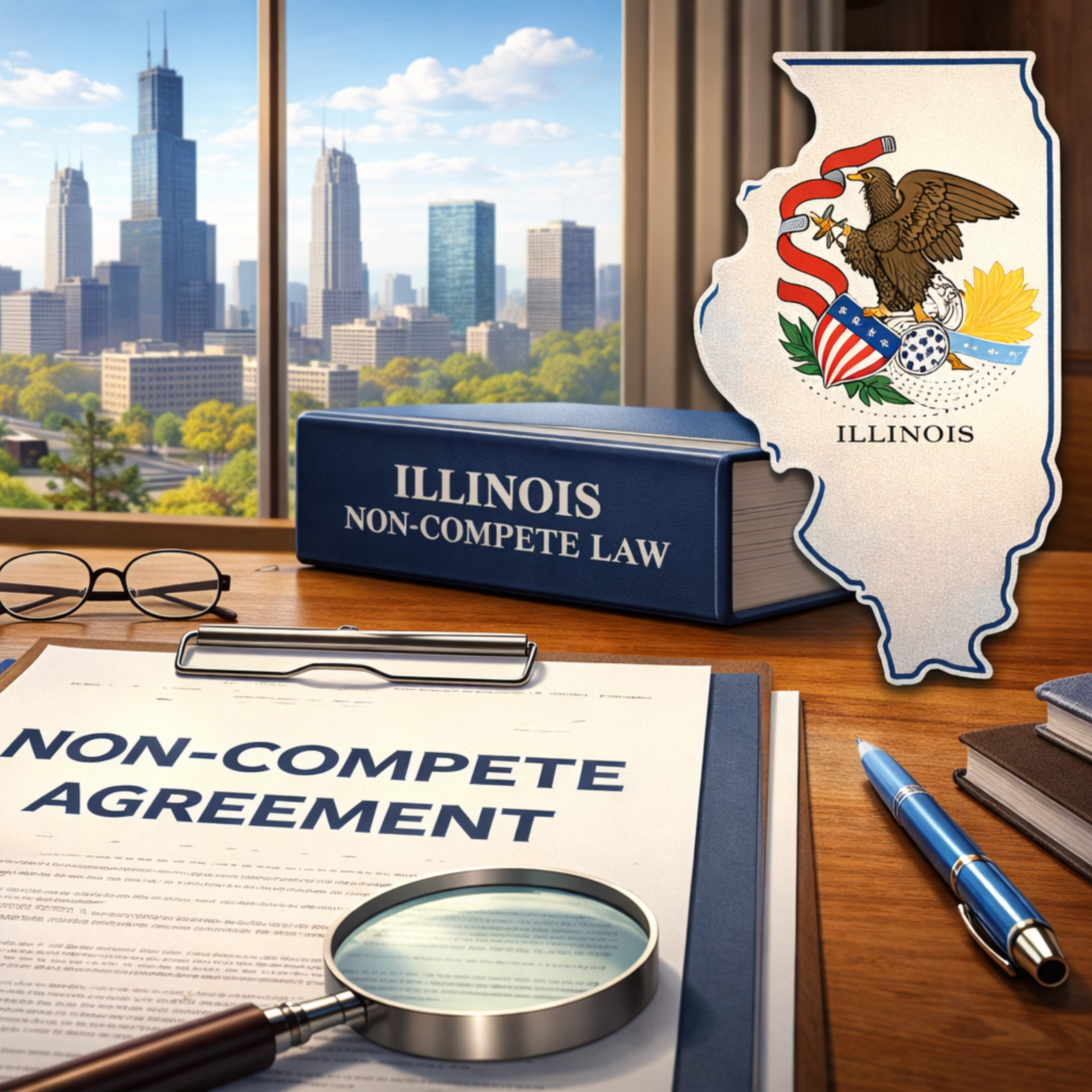 Non-compete agreements continue to be one of the most misunderstood areas of employment law for business owners.
Recent headlines about federal regulation led many employers to believe non-competes were banned nationwide. In reality, the situation is more nuanced. While federal regulators have attempted sweeping changes, Illinois law still primarily governs when and how non-compete agreements can be used.
For employers, understanding these rules is important. Improperly drafted or implemented agreements can become unenforceable and may even expose businesses to legal risk.
Below are answers to some of the most common questions Illinois employers ask about non-compete agreements.
Quick Answers About Illinois Non-Compete Agreements
Are non-compete agreements legal in Illinois?
Yes. Non-compete agreements are still legal in Illinois.
However, they are heavily regulated by the Illinois Freedom to Work Act, which places limits on when these agreements can be used and what requirements employers must follow when presenting them to employees.
Even when statutory requirements are met, courts will only enforce non-competes that are considered reasonable and tailored to protect legitimate business interests.
What is the Illinois salary threshold for non-compete agreements?
Illinois law restricts non-compete agreements for lower-income employees.
Currently, employers generally cannot require non-compete agreements for employees earning $75,000 per year or less.
For non-solicitation agreements, the threshold is $45,000 per year or less.
These thresholds increase every five years.
Beginning January 1, 2027, the limits will rise to:
• $80,000 for non-compete agreements
• $47,500 for non-solicitation agreements
Employers should review compensation structures and agreements as those increases approach.
How much time must employees be given to review a non-compete agreement?
Illinois law requires employers to give employees at least 14 calendar days to review a non-compete agreement before signing.
The employee may choose to sign sooner, but the opportunity to review the agreement for the full 14 days must be provided.
Employers must also provide written notice advising the employee to consult with an attorney before signing.
Failure to follow these procedural requirements can make an agreement unenforceable.
What makes a non-compete enforceable in Illinois?
Courts evaluate whether a non-compete agreement is reasonable and narrowly tailored to protect legitimate business interests.
Several factors are commonly considered, including:
• duration of the restriction
• geographic scope of the restriction
• the type of work being restricted
• the employee’s access to confidential information or customer relationships
Agreements that are overly broad or punitive are less likely to be enforced.
What is “consideration” for a non-compete agreement?
Illinois law requires employees to receive something of value in exchange for agreeing to a non-compete.
One commonly recognized form of consideration is two years of continued employment after signing the agreement.
However, the law may also recognize other meaningful benefits, such as financial incentives or professional opportunities, provided they are real and not merely symbolic.
Employers asking existing employees to sign new agreements should carefully document what consideration is provided.
Are there workers who cannot be subject to non-compete agreements?
Yes. Illinois law prohibits non-compete agreements for certain categories of workers regardless of salary.
These include many construction workers and some public-sector employees. Additional restrictions may apply depending on the employee’s role or the circumstances surrounding termination.
Employers should ensure agreements are tailored to specific job roles rather than using identical contracts across all employees.
Can non-compete agreements be challenged in court?
Yes. Employees frequently challenge non-compete agreements during disputes involving employment changes or business competition.
If a court finds that an agreement violates Illinois statutory requirements or is unreasonably broad, it may decline to enforce the restriction.
Because Illinois law also includes fee-shifting provisions in some situations, employers should use restrictive covenants carefully and with proper legal guidance.
Are there alternatives to non-compete agreements?
Many businesses protect their interests using other legal tools that may carry lower litigation risk.
These can include:
• confidentiality agreements
• trade secret protections
• invention assignment agreements
• non-solicitation provisions
• internal access controls for sensitive information
For some roles, these protections may be more appropriate than a broad non-compete restriction.
When should Illinois employers review their non-compete agreements?
Businesses should periodically review restrictive covenants to ensure they remain compliant with current laws and reflect the company’s actual operational risks.
Key moments to review agreements include:
• hiring new employees
• promotions or compensation changes
• approaching statutory threshold increases
• restructuring roles or responsibilities
Regular review can help avoid enforceability issues later.
Learn More About Illinois Non-Compete Agreements
For a deeper discussion of how non-compete rules apply to Illinois employers, see our related article:
What Illinois Business Owners Need to Know About Non-Compete Agreements in 2026
Understanding the legal framework surrounding restrictive covenants can help businesses protect their interests while minimizing legal risk.