Articles Tagged with Illinois employment law
Court Limits BIPA Damages in Pending Cases: What Illinois Businesses Need to Know After Clay v. Union Pacific
The Seventh Circuit Court of Appeals held in Clay v. Union Pacific Railroad Co. that the 2024 amendment to Section 20 of the Illinois Biometric Information Privacy Act applies to cases that were already pending when the amendment took effect on August 2, 2024.
What does that mean?
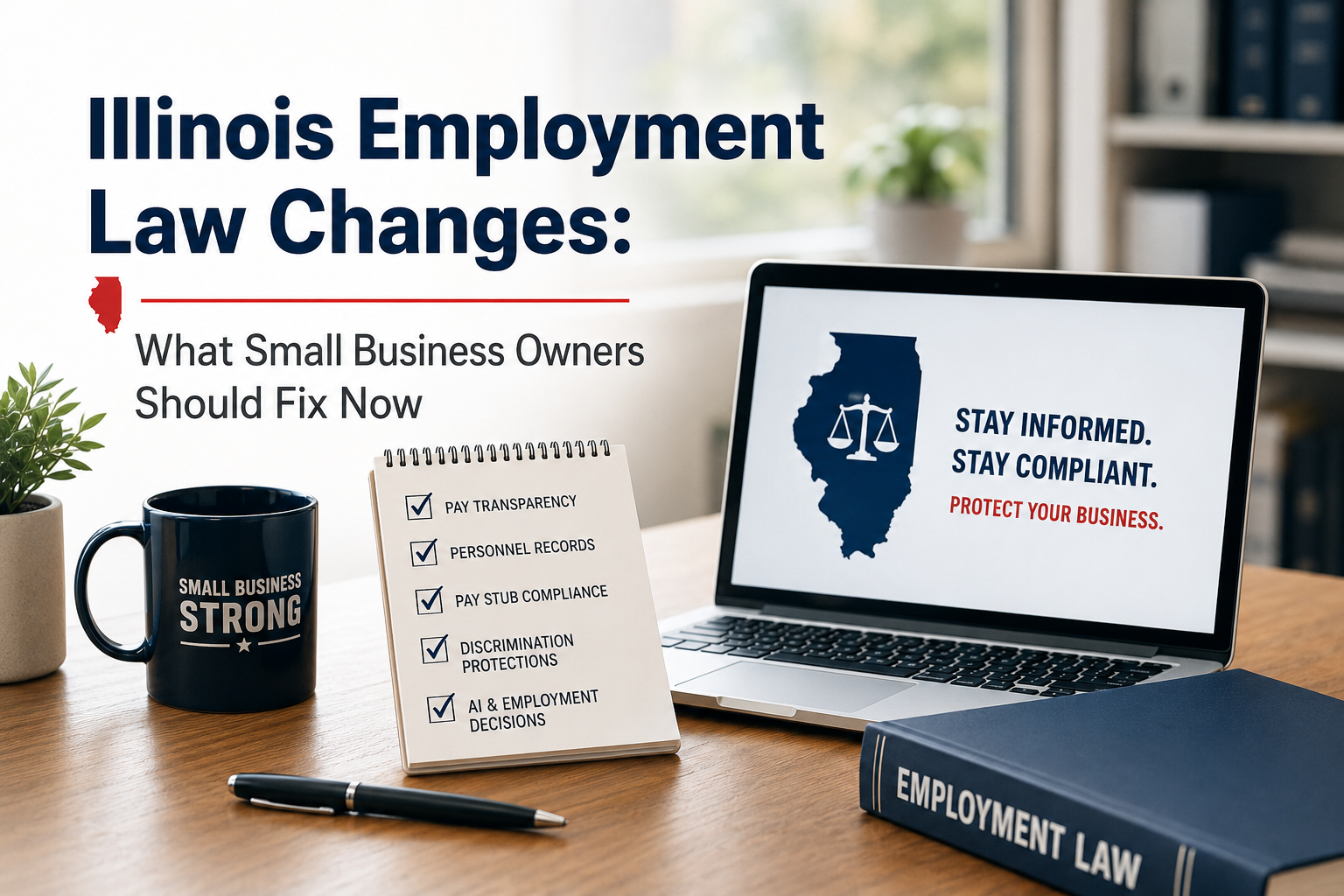
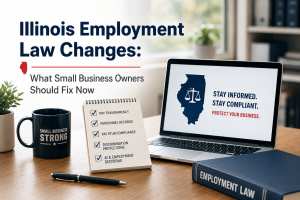
Illinois Employment Law Changes 2026: What Small Business Owners Must Fix Now
What changed? Illinois strengthened pay transparency mandates, expanded personnel file access rights, tightened pay stub requirements, broadened anti-discrimination protections to cover family responsibilities and reproductive health decisions, added restrictions on AI used in hiring, tightened severance and confidentiality agreement rules, and extended employee rights regarding employer-issued devices under VESSA, all effective in 2025–2026.
Who is affected? Most Illinois employers, particularly those with 15 or more employees, and any business that uses third-party recruiting tools, applicant tracking software, or staffing agencies.
What should you do now? Conduct a focused employment law audit covering job postings, payroll stubs, personnel file procedures, employee handbooks, AI-enabled vendor contracts, severance templates, and company-device policies.

Illinois Non-Compete Law FAQ: What Employers Need to Know
Non-compete agreements continue to be one of the most misunderstood areas of employment law for business owners.
Recent headlines about federal regulation led many employers to believe non-competes were banned nationwide. In reality, the situation is more nuanced. While federal regulators have attempted sweeping changes, Illinois law still primarily governs when and how non-compete agreements can be used.
For employers, understanding these rules is important. Improperly drafted or implemented agreements can become unenforceable and may even expose businesses to legal risk.
Illinois Non-Compete Agreements in 2026: What Business Owners Need to Know
Many business owners heard headlines saying the Federal Trade Commission “banned non-competes” and assumed restrictive covenants were essentially over.
That is not what ultimately happened.
While the FTC attempted to implement a sweeping nationwide ban, that rule never took effect. Courts blocked it, the appeals process ended, and the agency later removed the rule from federal regulations. As a result, there is no nationwide prohibition on non-compete agreements in 2026.
Is Your Business Compliant? New Sexual Harassment Training Laws in Illinois and Chicago
Illinois and the City of Chicago continue to take a firm stance on workplace harassment prevention. For business owners, this means that annual sexual-harassment training is mandatory, and Chicago employers face additional, more extensive requirements each year.
Many companies remain unaware of how these obligations overlap, and the consequences for noncompliance can be expensive. Here is a straightforward reminder of what you must provide and where to find free, compliant training materials.
Chicago Business Attorney Blog