 Chicago Business Attorney Blog


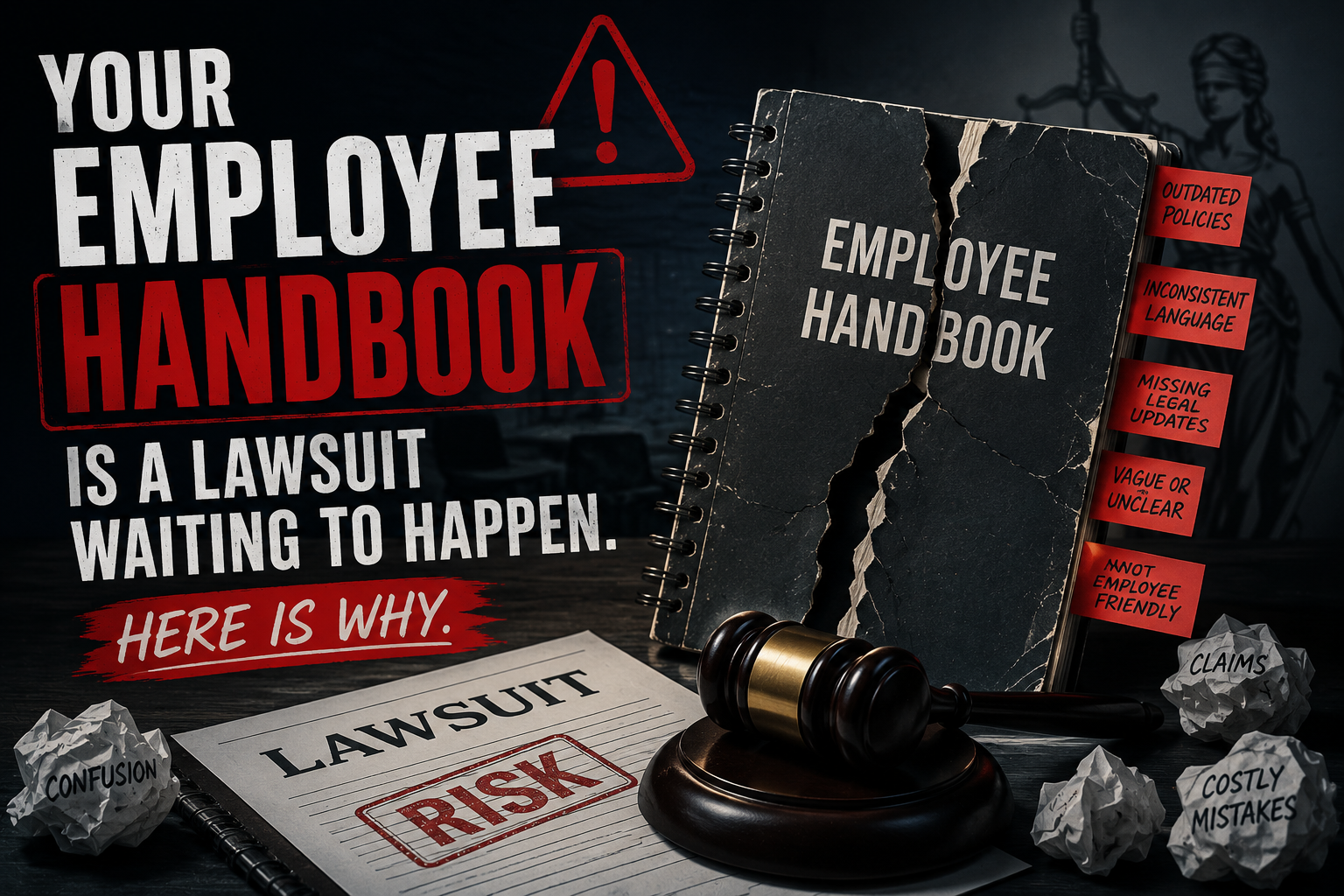 Most business owners think of their employee handbook as a formality.
A document you put together when you hired your first few employees, maybe pulled from a template, maybe had someone review it years ago. It lives in a folder on a shared drive or in a stack of onboarding paperwork. New hires sign it. Nobody reads it closely. It sits there doing what you assume is its job.
Here is the problem. That assumption is costing Illinois businesses significant money, and it is creating legal exposure that most owners do not discover until they are already in litigation.
Illinois is the second most complex state in the country for employee handbook compliance, trailing only California. With 28 state-specific policies required, Illinois sits at number two nationally, driven by an aggressive state legislature that has passed landmark employment legislation across multiple recent sessions, including the Paid Leave for All Workers Act, pay transparency requirements, and expanded equal pay protections, and by the City of Chicago, which layers its own minimum wage, paid leave, and sick leave requirements on top of everything the state passes.
If your handbook has not been reviewed by an employment attorney in the last 12 months, it almost certainly does not reflect current Illinois law. And a handbook that does not reflect current law is not protecting you. It is a document that can be used against you.
Why Handbooks Become Liabilities
The purpose of an employee handbook is to establish clear expectations, communicate your policies, and create a defensible record of what you told employees and when. When it works, it is one of the most valuable legal documents your business has. When it does not work, it creates contradictions, promises you did not mean to make, and gaps that plaintiffs’ attorneys know exactly how to exploit.
There are four ways this happens.
The handbook makes promises the law does not require you to keep. This is the most common trap. A handbook that says employees will receive a written warning before termination, or that performance reviews happen annually, or that certain benefits are guaranteed, can create contractual obligations you never intended to create. Illinois courts have found employer handbooks to constitute implied contracts in certain circumstances. Language that sounds reassuring in an onboarding context can become legally binding in a wrongful termination case.
The handbook contains policies that are now illegal. Illinois employment law has changed significantly in recent years and the pace of change has accelerated. A handbook drafted in 2021 or 2022, even one that was legally compliant at the time, very likely contains policies that conflict with current law. Provisions around noncompete agreements, confidentiality clauses, severance agreements, and AI-assisted hiring practices have all been substantially affected by recent Illinois legislation.
The handbook is silent on topics where Illinois law requires you to have a policy. Missing policies are just as dangerous as wrong ones. If your handbook does not address a required subject, you have no documented policy to point to when a dispute arises, and in some cases you are in direct violation of a statutory requirement.
The handbook is inconsistent with how you actually manage people. A policy that says one thing and a manager who does another is a plaintiff’s exhibit waiting to happen. The gap between what your handbook says and what your supervisors actually do is where discrimination claims, retaliation claims, and wage disputes are built.
What Illinois Law Changed That Your Handbook Probably Does Not Reflect
The volume of Illinois employment law changes in the past two years is unusually high. Here are the areas most likely to have left your handbook out of date.
Pay Transparency. Effective January 1, 2025, employers with 15 or more employees must include pay scales and benefits information in all job postings, both external and internal, for positions performed in Illinois or reporting to an Illinois-based supervisor. The Illinois Department of Labor is actively investigating complaints. If your handbook contains language about compensation practices that predates this requirement, it may contradict your current legal obligations.
Paid Leave. Illinois now requires paid leave for nearly all employees that can be used for any reason, not just illness or family emergencies. Your handbook must include an Illinois Paid Leave Policy, and effective January 1, 2026, updates were required to multiple policies including changes to the Nursing Mothers in the Workplace Act, military service members’ policy, and blood donation leave. A handbook that describes your leave policies using pre-2024 frameworks is describing a program that no longer exists under Illinois law.
AI in Hiring. As covered in a prior post on this blog, Illinois now treats the misuse of AI tools in hiring, screening, and performance evaluation as a civil rights violation under the Illinois Human Rights Act. If your company uses any third-party software in the hiring or performance management process, your handbook needs policies addressing that use, the notice requirements that apply, and how your company monitors for discriminatory outcomes. Most handbooks have nothing on this topic.
Workplace Transparency Act Amendments. House Bill 3638, signed in August 2025, amended the Illinois Workplace Transparency Act, which previously prohibited contracts and agreements that prevent employees from reporting unlawful workplace conduct. The new amendments expanded these requirements and imposed additional obligations on employers under separation and severance agreements. Confidentiality provisions and severance templates that predate this amendment need to be reviewed.
Noncompete and Non-Solicitation Agreements. If your handbook contains or references noncompete or non-solicitation provisions, those provisions need to comply with the Illinois Freedom to Work Act’s current requirements, including the salary thresholds above which noncompetes are enforceable. Many handbooks still contain noncompete language that became unenforceable when Illinois law changed and was never updated.
One Day Rest in Seven Act. Illinois amended the One Day Rest in Seven Act to include protections against retaliation and discrimination, protecting employees who make complaints, begin proceedings, testify, or exercise any other right under the law. If your handbook’s scheduling and workweek policies predate this amendment, they do not include the required retaliation protections.
Illinois Human Rights Act Amendments. Effective January 1, 2026, amendments to the Illinois Human Rights Act eliminated the requirement that investigations include mandatory fact-finding conferences and expanded employee protections in several areas. Anti-discrimination and anti-harassment policies in your handbook need to reflect current IHRA standards, not the framework that existed two or three years ago.
Workers’ Rights and Safety Act. Illinois enacted the Workers’ Rights and Safety Act, which establishes that Illinois will maintain worker protections at the level they existed under federal law as of April 28, 2025, ensuring these protections cannot be reduced by subsequent federal rollbacks, reinterpretations, or regulatory changes. This is particularly relevant for businesses that look to federal standards as their compliance benchmark. In Illinois, the floor is now set by state law, and federal rollbacks do not lower it.
The Chicago Factor
If your business operates in Chicago or employs workers who work in Chicago, your compliance obligations go beyond Illinois state law. Chicago maintains its own minimum wage, its own paid leave and paid sick leave ordinances, and its own enforcement mechanisms. Chicago’s minimum wage reached $16.60 per hour as of July 2025 for employers with four or more employees.
A handbook written for an Illinois employer without Chicago-specific addenda is incomplete if any of your employees work within city limits. This includes remote employees who live and work in Chicago even if your office is in the suburbs.
The Specific Language That Gets Businesses Sued
Beyond the compliance gaps, there are categories of handbook language that employment attorneys on the plaintiff’s side recognize immediately as leverage. If your handbook contains any of the following, it deserves a close look.
Progressive discipline policies stated as mandatory. Language that says your company “will” follow a progressive discipline process before termination can override Illinois’s at-will employment doctrine in practice. Unless you follow that process every single time without exception, the policy becomes a sword for terminated employees to use against you.
Promises about benefits, bonuses, or raises. Handbook language describing discretionary bonuses or periodic raises in terms that sound mandatory has generated wage claims. The word “will” is doing a lot of legal work in many handbooks that were written to sound reassuring rather than precise.
Confidentiality provisions that are overbroad. Provisions that purport to prohibit employees from discussing wages, working conditions, or workplace complaints with anyone outside the company can violate the National Labor Relations Act and Illinois law. This language appears in a significant percentage of small business handbooks drafted before 2020.
Arbitration clauses that do not comply with current requirements. Mandatory arbitration provisions need to be carefully drafted to be enforceable. Provisions that were inserted without legal review, or that sweep too broadly, may not hold up when you actually need them to.
Social media policies that restrict protected speech. Overly broad social media policies that prohibit employees from posting anything about their employer, without careful carve-outs for protected concerted activity, have been repeatedly struck down by the NLRB.
What a Handbook Audit Actually Involves
When a business owner brings their handbook to us for review, we are looking at several things simultaneously.
First, does the handbook comply with current Illinois and federal law, including all recent amendments? This is the baseline, and it is where most outdated handbooks fail.
Second, does the handbook create any unintended contractual obligations? We look specifically at language around discipline, termination, benefits, and performance management for promises that have not been made deliberately.
Third, is the handbook internally consistent? Contradictions between policies, between the handbook and any separate employment agreements, or between the handbook and the company’s actual practices are all vulnerabilities.
Fourth, are there required policies that are missing? Illinois mandates specific handbook content in multiple areas. Absence of a required policy is both a compliance failure and a liability in any related dispute.
Fifth, does the Chicago addendum exist and is it current? For businesses with Chicago employees, this is its own review.
A handbook audit is not a lengthy or particularly expensive engagement. What it produces is a document you can actually rely on when something goes wrong, rather than a document that makes a bad situation worse.
The Timing Issue
Illinois employment law changes every legislative session, and the last two sessions have been unusually active. Illinois lawmakers enacted an array of new employment-related laws and amendments that recently took effect or will take effect in 2026, expanding employee leave rights, strengthening workplace protections, making changes at the Illinois Department of Human Rights, broadening equal pay obligations, and imposing additional requirements under the Illinois Workplace Transparency Act.
The businesses that get caught are not usually the ones that deliberately ignored the law. They are the ones that did their compliance work in 2021, or 2022, or 2023, and assumed it still held. It does not. The law that existed when your handbook was last updated is not the law that governs your workplace today.
One More Thing Worth Saying Plainly
The employee handbook is often the first document produced in employment litigation. Before depositions, before discovery, before any testimony, the plaintiff’s attorney asks for the handbook. What is in it, what is missing from it, and whether your company actually followed it are three of the first questions that get answered.
A handbook that protects you in that moment is one that was drafted with that moment in mind. A handbook that was pulled from a template, updated piecemeal, or never reviewed by counsel is one that creates problems you will spend significant money trying to manage.
The audit takes less time than the lawsuit.
Bellas and Wachowski Reviews and Updates Employee Handbooks for Illinois Businesses
George Bellas and the team at Bellas and Wachowski work with Chicago-area businesses to review, update, and draft employee handbooks that comply with current Illinois law and actually protect the businesses that rely on them. If your handbook has not been reviewed in the last year, now is the right time.
Call 800.825.9260 or contact us at businessattorneychicago.com. The consultation starts with your handbook and ends with a clear picture of where you stand.