 Chicago Business Attorney Blog


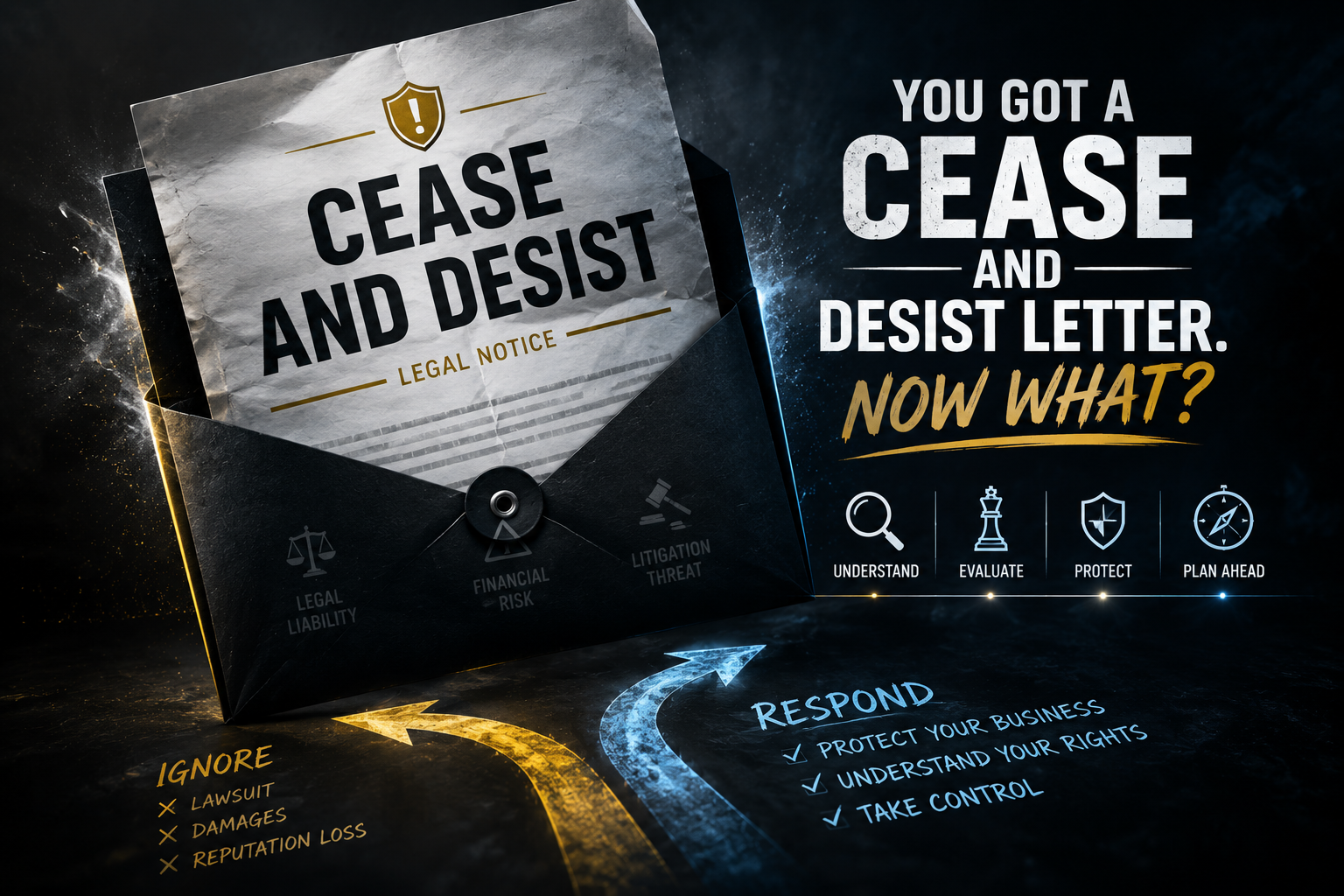 You opened your email this morning and something stopped you cold.
A letter. From an attorney. Addressed to your business.
The words “cease and desist” are somewhere near the top, followed by phrases like “immediate action required,” “legal liability,” and “failure to comply may result in litigation.”
Your stomach dropped. You read it twice. Maybe three times. And now you are sitting there wondering whether you are about to lose everything you built.
Here is what you need to know first: receiving a cease and desist letter is not the same as being sued. It is not a court order. It does not mean you have already lost. But it does mean someone with an attorney behind them believes they have a legal claim against you, and how you respond in the next few days matters enormously.
What a Cease and Desist Letter Actually Is
A cease and desist letter is a written demand, typically sent by an attorney on behalf of a client, asking you to stop doing something. It might demand that you:
- Stop using a name, logo, or tagline they claim infringes on their trademark
- Remove content from your website they say is copyrighted or defamatory
- Stop contacting a former employee covered by a noncompete or non-solicitation agreement
- End a business practice they believe violates a contract
- Halt what they characterize as unfair competition or trade secret misappropriation
The letter usually includes a deadline, a description of the alleged wrongdoing, and a warning about what comes next if you ignore it.
What it is not: a court filing. No judge has reviewed it. No court has ruled on anything. It is, in plain terms, the first move in a legal dispute, and the other side has made theirs. Now you need to make yours.
The Worst Things You Can Do When You Receive One
Before getting to what you should do, let us talk about what business owners get wrong, because these mistakes happen constantly and they turn manageable situations into expensive ones.
Ignoring it. This is the most common mistake. The letter feels threatening, so people set it aside hoping the problem goes away. It does not. Ignoring a cease and desist letter signals to the other side that you are either unaware of the claim or unwilling to take it seriously. It accelerates the path to a lawsuit.
Responding immediately on your own. The second most common mistake. You are angry, or scared, or both, and you fire off an email or call the other attorney directly. Anything you say in that response can and will be used against you. Admissions, apologies, or off-the-cuff explanations can damage your legal position before you have even had a chance to understand what you are actually facing.
Complying immediately without evaluation. Sometimes the letter demands something you have every legal right to keep doing. Stopping immediately, without knowing whether the claim even has merit, can be unnecessary, costly, and can actually weaken your position if the dispute escalates.
Panicking and making changes to your business. Pulling down your website, rebranding, firing employees, or destroying documents in response to a cease and desist letter can create legal problems that did not exist before you received the letter. Do not make operational decisions under panic.
What You Should Do Right Now
Read it carefully, then stop. Understand what is being demanded and what deadline has been set. Most cease and desist letters give you somewhere between 10 and 30 days to respond. You usually have time to think. Use it.
Do not destroy anything. Once you receive a legal demand, you have an obligation to preserve relevant documents, communications, contracts, and records. Deleting emails or files after receiving a cease and desist letter can expose you to serious legal consequences, including sanctions if litigation follows.
Call a business attorney, not a general practitioner. This is not the moment to ask your cousin who does real estate closings. Cease and desist letters touch trademark law, contract law, employment law, trade secret law, or some combination of all of them depending on the facts. You need someone who handles business disputes and knows how to evaluate whether the claim has actual merit.
Gather your documentation. Before you meet with an attorney, pull together anything relevant. The contracts involved. The communications between you and the other party. Your business records related to whatever they are claiming. The more organized you are, the faster and cheaper the legal evaluation will be.
What Happens After You Respond
Once an attorney reviews the letter and your situation, there are typically a few directions this can go.
The claim has no merit and you tell them so. A well-crafted response from your attorney, explaining why the claim is legally unfounded, often ends the matter. Many cease and desist letters are sent to intimidate, not because the other side has a strong case. An attorney who knows what they are looking for can identify this quickly.
There is a real dispute that can be negotiated. This is actually the most common outcome. The other side has a concern, you have a position, and there is a resolution somewhere in the middle that does not require a courtroom. Settlement, licensing agreements, modified business practices, or a simple clarification of terms can resolve a large percentage of these situations without litigation.
The other side is serious and litigation is likely. In some cases, particularly those involving ongoing trademark infringement, clear contract breaches, or active trade secret theft, the letter is the beginning of a lawsuit, not an alternative to one. If that is where things are headed, you want to know that early and be in a position of strength, not scrambling after the complaint has been filed.
A Few Questions Your Attorney Will Ask
When you call, expect to walk through some version of these questions. It helps to think about them before you pick up the phone.
What exactly is the letter demanding you stop doing? Is the activity they are describing something your business actually does? How long have you been doing it? Do you have a written contract with the party who sent the letter? Have there been prior disputes, warnings, or communications with this company or person? Do you have documentation of when and how you started the activity in question?
The answers to these questions shape everything about how to respond.
Why the First 72 Hours Matter
The window between receiving a cease and desist letter and responding to it is where outcomes are often decided. A thoughtful, attorney-drafted response that asserts your position clearly and preserves your legal options is a very different document than either silence or a panicked reply.
Business owners who respond correctly, meaning promptly, strategically, and through counsel, routinely resolve these situations without ever setting foot in a courtroom. Business owners who ignore the letter, respond emotionally, or wait too long frequently end up in litigation that could have been avoided.
The letter is not the end of your business. But your next move matters.
Bellas and Wachowski Represents Chicago-Area Businesses Facing Legal Demands
If your business received a cease and desist letter, call before you respond. George Bellas and the team at Bellas and Wachowski have handled business disputes across industries throughout the Chicago area for decades. The consultation will tell you what you are actually facing and what your options are.
Call 800.825.9260 or contact us online. The sooner you call, the more options you have.