Articles Posted in AI in business

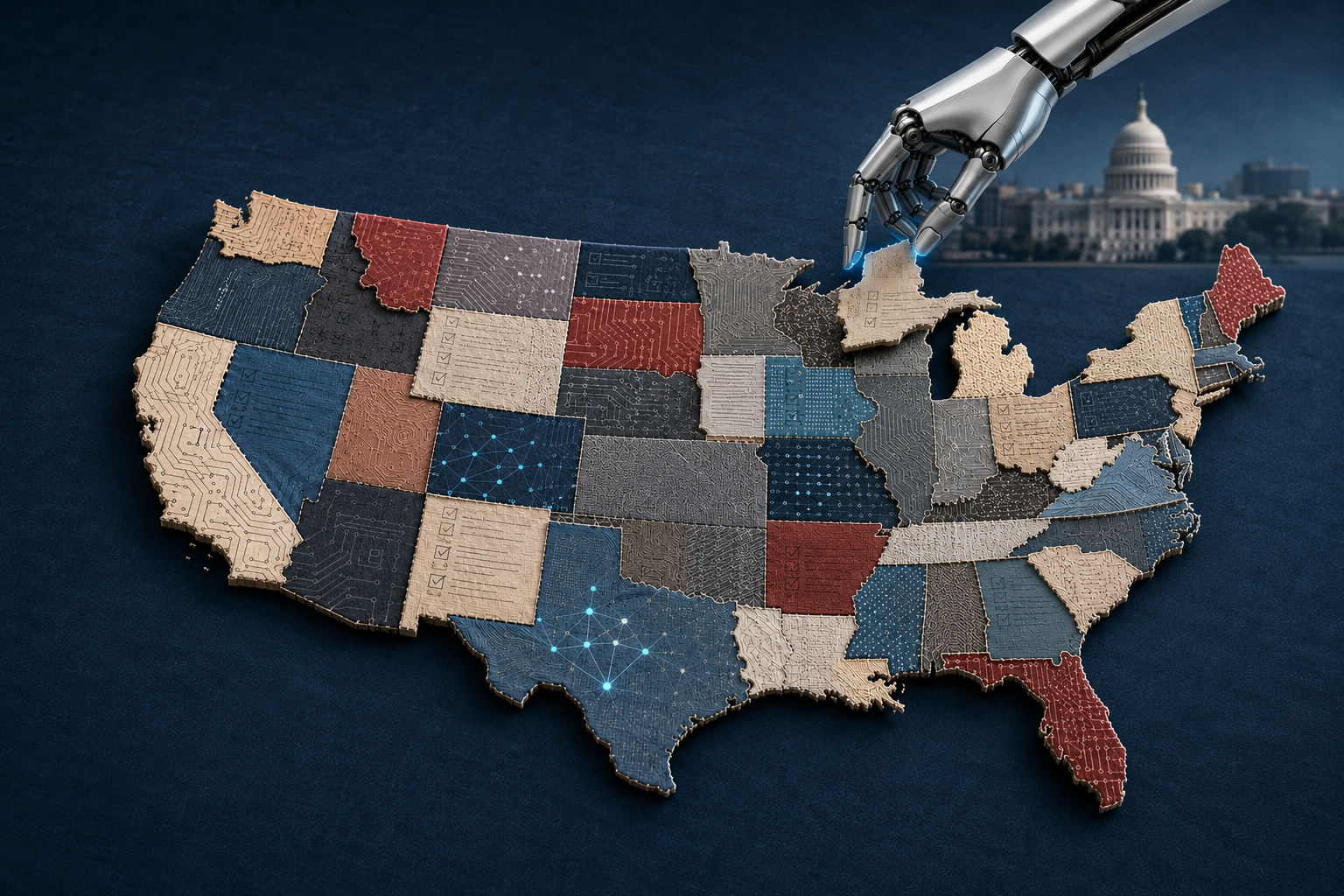
9CF03321-E485-4F10-A6D6-EBD9D619E9C0-300x200If you have been waiting for Washington to hand down one clear rulebook for how your business can use AI, stop waiting. It is not coming this year, and it may not be coming next year either.

Congress has not passed a comprehensive federal AI law. There is no single statute you can read to know what is required of your business. What exists instead is a fast growing collection of state laws, agency guidance, and executive orders that do not agree with each other, do not cover the same ground, and in some cases are actively fighting over who gets to regulate you at all. That is not a future risk. That is the actual legal environment your business is operating in right now, today, whether you have looked into it or not.

Why Everyone Assumed Federal Law Was Coming

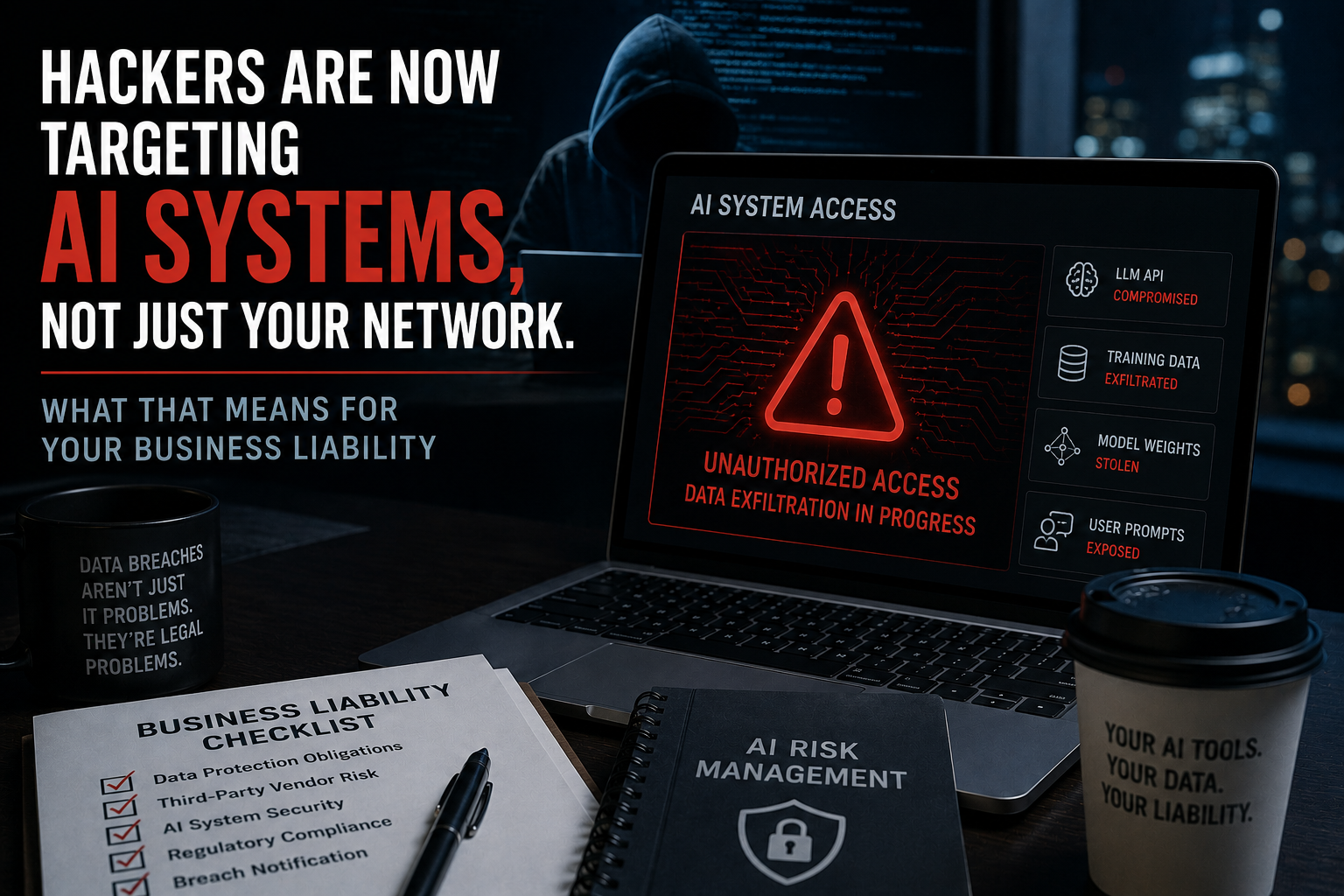
D5CD5B04-0609-4107-B18A-7A2E86931444-300x200For twenty years, “cybersecurity” meant one thing for most business owners: protect the network. Firewalls, endpoint protection, employee training on phishing emails. You knew what you were defending and you generally knew what your insurance covered if you failed.

That model is already out of date.

Attackers have shifted targets. Instead of only breaking into your servers, they are going after the AI tools your business now runs on: the chatbot on your website, the AI agent your vendor plugged into your CRM, the automated workflow that reads your inbox and drafts responses. And the legal and insurance world has not caught up to the speed of that shift, which means a lot of business owners are exposed in ways they do not know about yet.

29C4C306-2FC0-4F13-9F04-03F6A7A4E1D3-300x200The call comes in on a Tuesday afternoon.

It sounds exactly like your business partner. Or your CFO. Or the vendor you have worked with for six years. The voice has the same cadence, the same phrasing, the same slight accent you have always recognized. Maybe there is a video call and the face matches too.

There is an urgent wire transfer. A confidential acquisition. A vendor payment that needs to go out before end of business. The request is unusual but the person making it is someone you know, someone you trust, someone you would wire money for without a second thought.

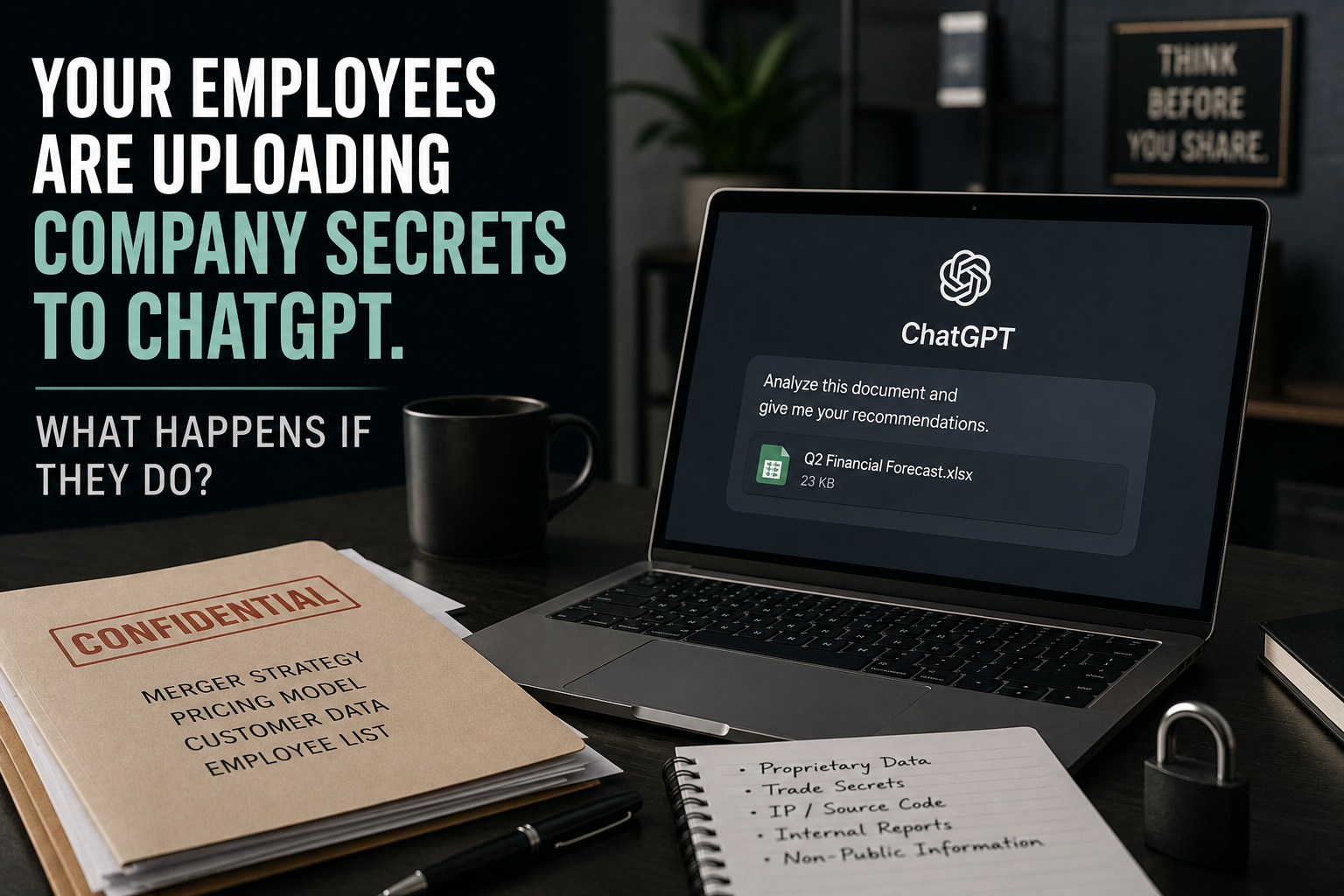
57F447A8-E5FB-4B8F-96B4-E67FF8E5E436-300x200Your employee is not trying to steal anything.

They are trying to finish a task faster. They paste your pricing model into ChatGPT to reformat it as a client proposal. They upload a draft contract and ask the AI to clean up the language. They feed your source code into the prompt to find a bug. They summarize a confidential internal investigation report to save time writing it up.

None of this feels like a security incident. It feels like using a tool.

A430F844-8238-433E-B492-E6F55F8F6901-300x200There is a number that should stop you cold.

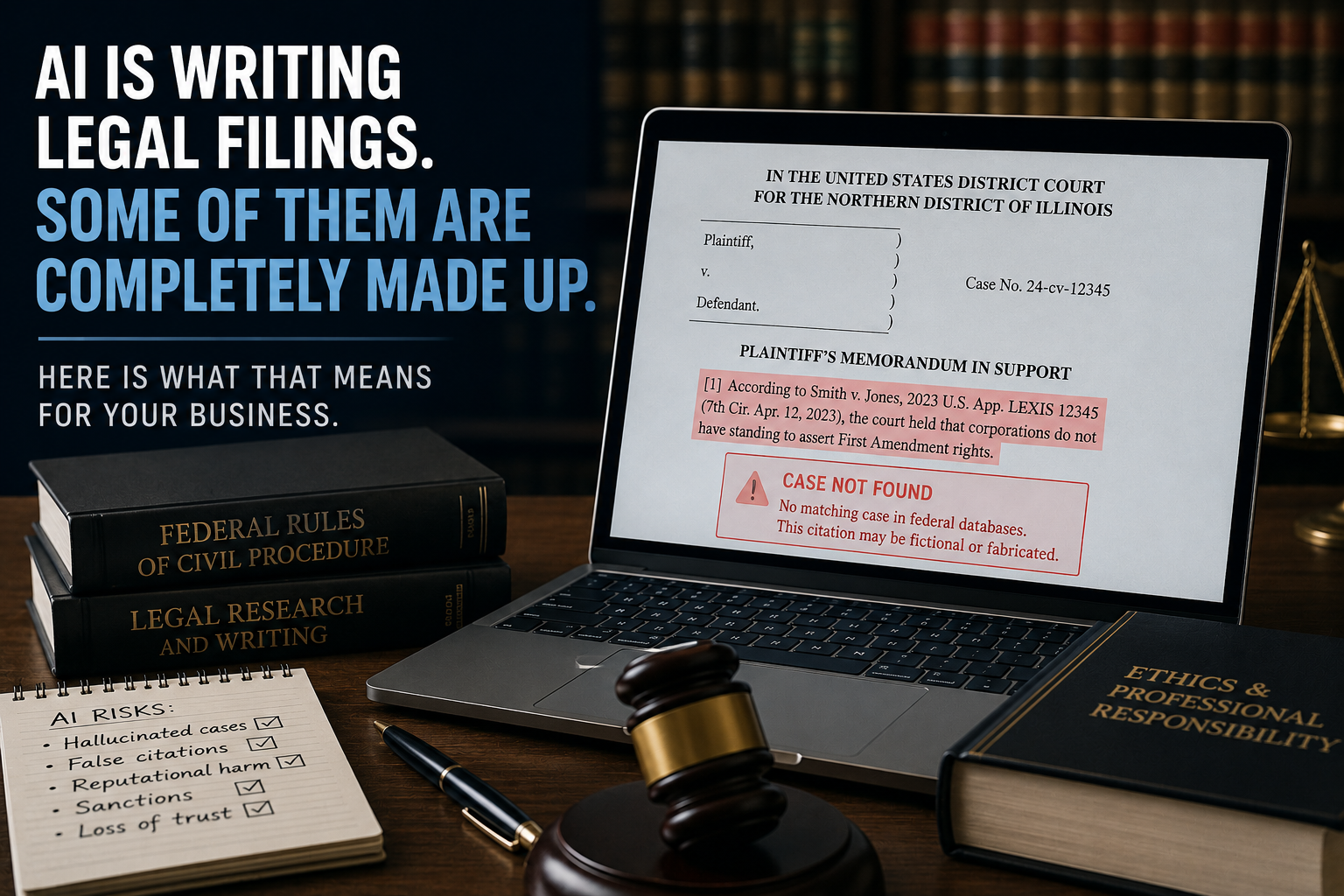
As of June 9, 2026, researchers have documented 1,598 court proceedings worldwide in which AI-generated content, fabricated case citations, invented statutes, false quotes from real judgments, was submitted to a court. Of those cases, 496 involved licensed attorneys. The number is growing at roughly 8 new cases per day.

US courts imposed over $145,000 in AI-filing penalties in the first quarter of 2026 alone.

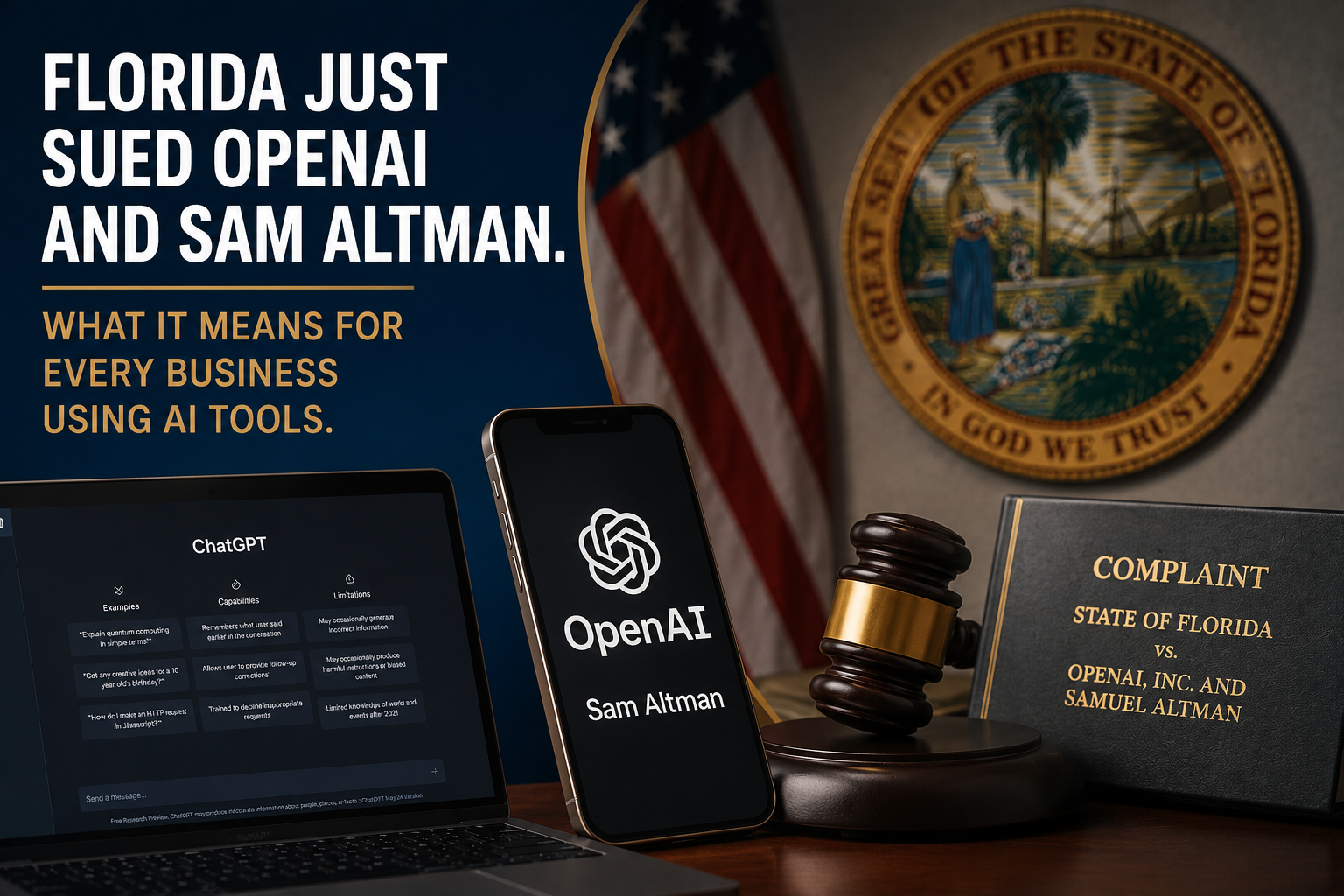
200CE7BC-9B59-48E7-AB51-3F0959FB7762-300x200On June 1, 2026, Florida Attorney General James Uthmeier filed an 83-page civil complaint against OpenAI and its CEO Sam Altman in Highlands County Circuit Court. Florida became the first state in the United States to sue the maker of ChatGPT over the alleged safety failures of its product.

The lawsuit accuses OpenAI of knowingly releasing a dangerous product, suppressing internal safety warnings, marketing ChatGPT as safe for children without adequate safeguards, and collecting minors’ data without meaningful parental oversight. It seeks to hold Sam Altman personally liable for what it describes as his utter disregard for the risk to human life caused by his conduct as CEO.

OpenAI is a $300 billion company. It has some of the best lawyers in the country. It will defend this case aggressively and the outcome is genuinely uncertain.

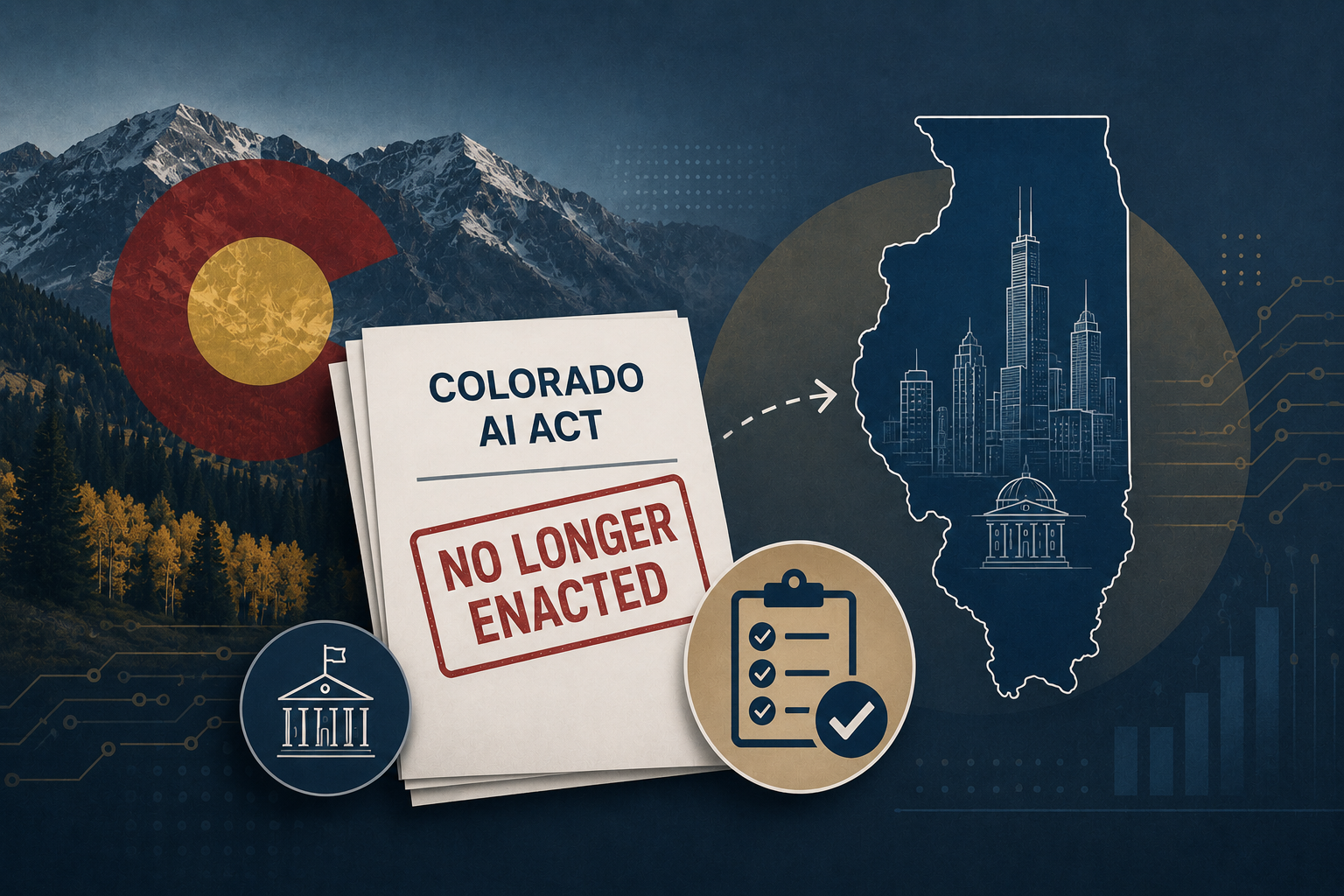
8B4D3AF3-C721-4050-A5CD-D192B5B77A12-300x200You may have seen the headlines earlier this year about the Colorado AI Act taking effect June 30, 2026. If you were preparing for that law, you were preparing for the wrong thing.

The original Colorado AI Act, formally known as SB 24-205, is dead in any practical sense. A federal court stayed enforcement in April 2026. The U.S. Department of Justice and Elon Musk’s xAI joined a lawsuit challenging its constitutionality. The Colorado legislature responded by passing a replacement bill. Governor Polis signed the replacement, SB 26-189, into law on May 14, 2026.

What that means is that the comprehensive compliance framework most businesses were tracking, the one with risk management programs, annual impact assessments, and sweeping algorithmic discrimination duties, has been replaced with something narrower. The June 30 deadline for the original law is effectively moot.

C58B1923-71ED-4A57-B419-4E62F3757064-300x200If your company uses software to screen resumes, score job applicants, schedule interviews, evaluate performance, or decide who gets promoted, you may already be violating Illinois law.

That is not a hypothetical. It is the current legal reality for employers operating in Illinois as of January 1, 2026.

A lot of business owners in the Chicago area know AI tools are somewhere in their hiring process. What most do not know is that Illinois now treats the misuse of those tools as a civil rights violation, with penalties that can reach $70,000 per violation, plus actual damages and attorneys’ fees. And critically, intent does not matter. If your AI produces a discriminatory outcome, you are liable whether you meant for that to happen or not.

Contact Information