Articles Posted in Aritificial Intelligence in Business

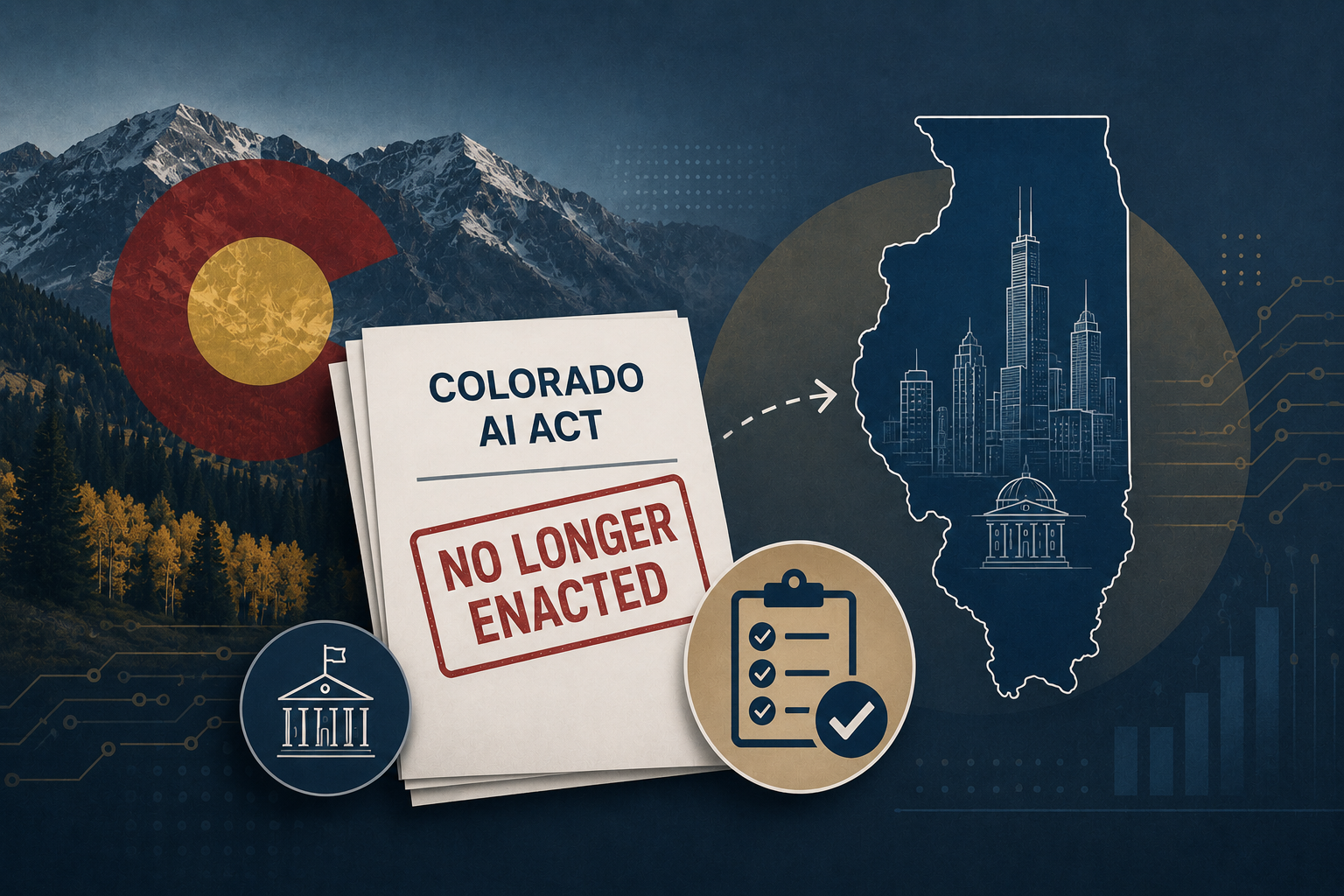
8B4D3AF3-C721-4050-A5CD-D192B5B77A12-300x200You may have seen the headlines earlier this year about the Colorado AI Act taking effect June 30, 2026. If you were preparing for that law, you were preparing for the wrong thing.

The original Colorado AI Act, formally known as SB 24-205, is dead in any practical sense. A federal court stayed enforcement in April 2026. The U.S. Department of Justice and Elon Musk’s xAI joined a lawsuit challenging its constitutionality. The Colorado legislature responded by passing a replacement bill. Governor Polis signed the replacement, SB 26-189, into law on May 14, 2026.

What that means is that the comprehensive compliance framework most businesses were tracking, the one with risk management programs, annual impact assessments, and sweeping algorithmic discrimination duties, has been replaced with something narrower. The June 30 deadline for the original law is effectively moot.

C58B1923-71ED-4A57-B419-4E62F3757064-300x200If your company uses software to screen resumes, score job applicants, schedule interviews, evaluate performance, or decide who gets promoted, you may already be violating Illinois law.

That is not a hypothetical. It is the current legal reality for employers operating in Illinois as of January 1, 2026.

A lot of business owners in the Chicago area know AI tools are somewhere in their hiring process. What most do not know is that Illinois now treats the misuse of those tools as a civil rights violation, with penalties that can reach $70,000 per violation, plus actual damages and attorneys’ fees. And critically, intent does not matter. If your AI produces a discriminatory outcome, you are liable whether you meant for that to happen or not.

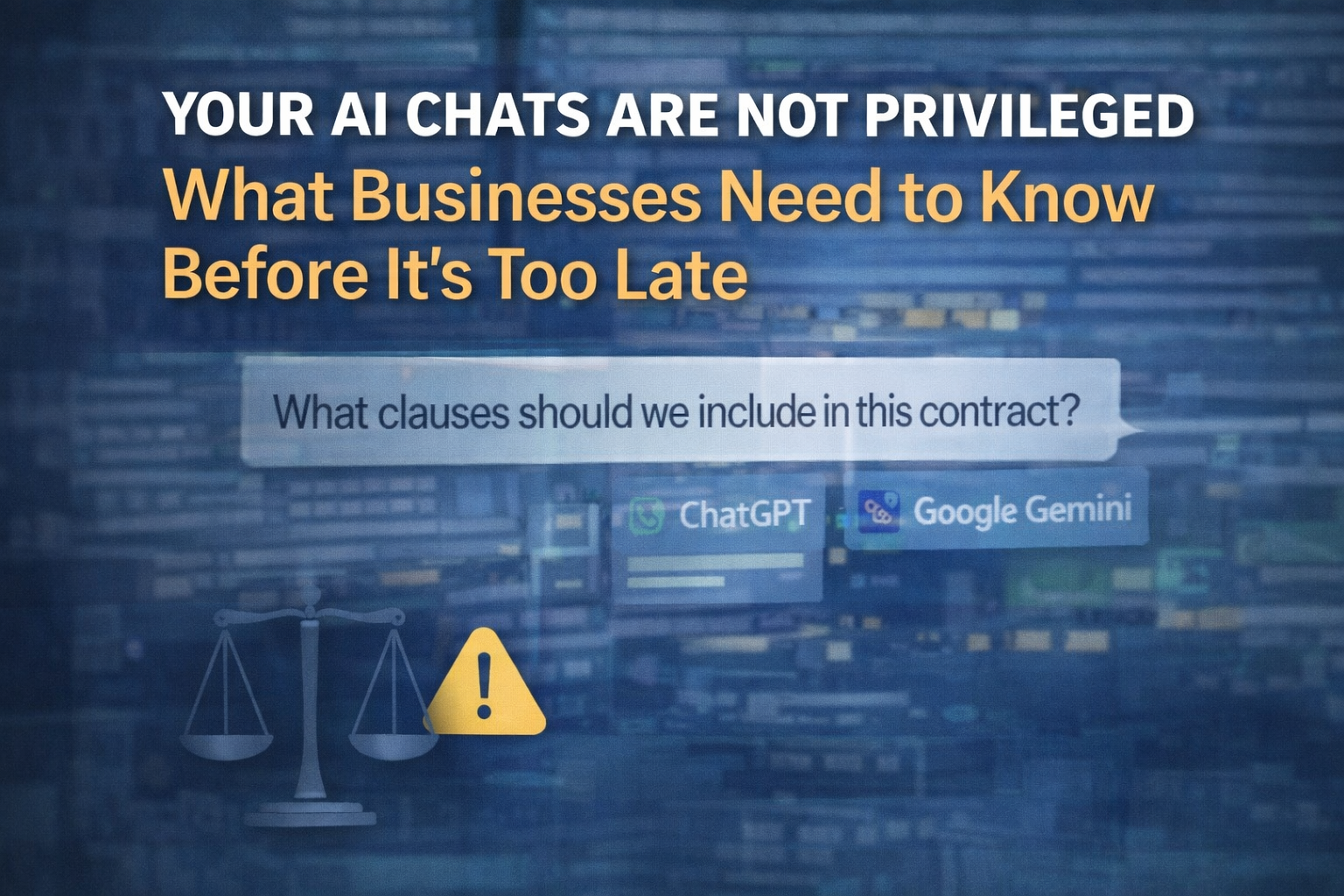
1FF5750E-FB67-4652-9050-252B9E13B5BC-300x200The uncomfortable truth: your AI conversations may be evidence

If you are using AI tools like ChatGPT, Claude, or Google Gemini to ask legal questions, draft contracts, or think through business decisions, you need to understand one thing:

Those conversations are likely not protected by attorney-client privilege.

Illinois Civil Rights Protection Goes High-Tech: Illinois Human Rights Act Expanded to Include AI Regulation

Illinois Human Rights Act Expanded to Include AI Regulation

Recently, Illinois Governor Pritzker signed H.B. 3773 into law, marking a significant expansion of the Illinois Human Rights Act to include specific regulations on the use of artificial intelligence (AI) in employment decisions. This move reflects the state’s ongoing commitment to civil rights protection, now extending into the realm of advanced technology.

What Does H.B. 3773 Mean for Your Business?


AI-content-300x251

AI & Content Creation

Businesses using generative AI programs like ChatGPT to create any content—whether for blogs, websites or other marketing materials, and whether text, visuals, sound or video—need to ensure that they’re not inadvertently using copyrighted materials in the process.

Clearly, the times they are a changing….and businesses need to adapt to the changes.  Employers should promulgate messages to their employees and contractors updating their policy manuals to ensure that communications professionals and others crafting content are aware of the risks of using AI-generated materials, which go beyond the possibility that they are “hallucinated” rather than factual—although that’s worth considering, too.

keep-your-secrets-300x251

Using Generative AI? Keep Your Secrets

Businesses are finding generative AI programs like ChatGPT useful in functions from financial services to human resources. Although still in its early stages, and far from entirely reliable, the technology is evolving quickly and its tools and practices will continue to develop. The Cisco 2024 Data Privacy Benchmark study found that 79% of businesses say they’re deriving measurable value from generative AI for everything from creating documents to coding.

But this use of generative AI has led to a number of cautions, mostly commonly and loudly about the accuracy of the information that apps like ChatGPT generate—including their tendency to “hallucinate” assertions when they don’t actually have answers.

AI-Washing-300x251

Is AI Washing Dirty?

Many people have become familiar with the term “greenwashing,” referring to attempts by a company to cast its products as more environmentally friendly than they are through public relations and marketing “spin” efforts.

Now comes the concept of “AI-washing,” in which companies exaggerate the degree to which or ways in which their products and services are powered by artificial intelligence, in order to gain a real or perceived competitive advantage. In addition to potentially misleading consumers and harming investors, this can break U.S. securities law, according to Gary Gensler, chair of the Securities and Exchange Commission.

Contact Information