 Chicago Business Attorney Blog


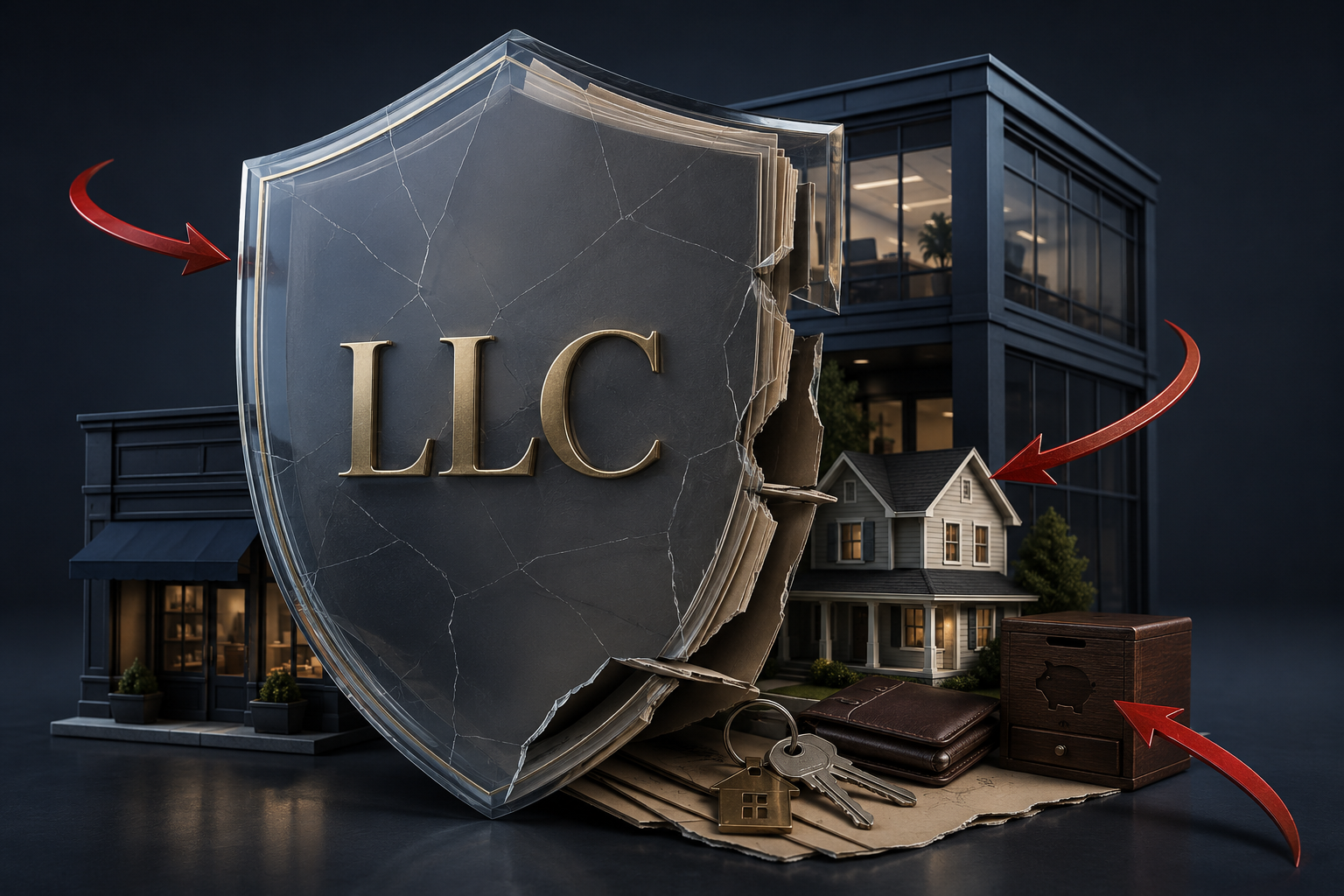 Business owners form an LLC and treat the acronym itself like a force field. Once it’s filed with the state, the thinking goes, personal assets are off limits no matter what happens in the business. That belief is doing a lot of unnoticed work in the phrase “limited liability company,” and the word carrying that weight is limited, not total.
Illinois courts do respect the LLC structure, and they don’t strip that protection away lightly. But there are specific, common ways business owners undo their own protection without realizing it, usually years before anything goes wrong, when the habits that create the exposure were formed.
The Legal Standard, in Plain Terms
Illinois treats the separation between an LLC and its owners as real and meaningful. Courts pierce that separation reluctantly, and only after a plaintiff clears what Illinois law calls a substantial burden. Two things generally have to be true. First, there has to be such a unity of interest and ownership between the business and its owner that the two no longer function as genuinely separate. Second, treating them as separate would have to sanction a fraud or produce a fundamentally unjust result.
That sounds like a high bar, and it is. The problem is that ordinary day to day habits, the ones that feel harmless in the moment, are exactly what build the fact pattern courts use to find that first condition. Here’s where that actually happens.
1. Commingling Personal and Business Funds
This is the single fastest way business owners undo their own protection, and it usually starts small. Paying a personal expense out of the business account because it’s convenient. Depositing a client check into a personal account during a busy week. None of it feels like a legal event at the time.
Courts see it differently. If the business’s money and the owner’s money move back and forth without a clear line between them, that is direct evidence supporting the unity of interest a plaintiff needs to pierce the veil. One clean rule solves most of this: the LLC’s accounts exist for the LLC’s activity, full stop, with nothing personal running through them, ever.
2. Signing Contracts and Documents in Your Own Name
How a contract gets signed matters more than most business owners realize. Illinois law generally protects an agent signing on behalf of a disclosed business from personal liability on that contract, but only if the signature actually reflects that representative role. A signature block reading simply your name, without the entity name and your title, can create exactly the kind of confusion that later gets litigated over who actually promised what.
The fix costs nothing. Use your full legal entity name, LLC included, on every contract, invoice, and proposal, and sign in a representative capacity, your name followed by your title on behalf of the company. It’s a small habit that closes a real gap.
3. Personal Guarantees You Signed Without Fully Registering It
This one isn’t about losing protection through sloppy habits. It’s about giving the protection away voluntarily, often without fully clocking that it happened. Lenders and landlords routinely ask business owners to personally guarantee a loan or a lease, especially for newer or smaller businesses. Sign that guarantee, and the LLC’s liability shield simply doesn’t apply to that specific debt. The company’s structure is irrelevant to an obligation you personally agreed to cover.
Before signing anything with a guarantee clause buried in it, know exactly what you’re agreeing to stand behind personally, and negotiate the scope of that guarantee wherever you have leverage to do it.
4. Undercapitalizing the Business From the Start
Starting a business without adequate funding, then routing money out of it as fast as it comes in is a classic pattern courts point to when finding that an LLC was never treated as a genuinely separate enterprise. If a company never had enough capital to plausibly operate on its own, and funds were pulled out as fast as they arrived, a court can view the entity as existing on paper only, with the owner as its true operating identity the entire time.
This doesn’t mean every young or thinly funded business is at risk. It means the business needs to actually function as its own financial entity, with real operating funds and real records, not as a pass through for the owner’s personal finances.
5. Your Own Negligent or Wrongful Acts Are Never Shielded
This is the exposure business owners most often forget entirely, because it has nothing to do with formalities or paperwork. An LLC protects owners from the debts and obligations of the business. It does not protect you personally from liability for your own negligent or wrongful conduct, even when that conduct happens in the course of running the business.
If you personally cause harm, through negligence, a direct wrongful act, or conduct that amounts to fraud, the LLC structure was never designed to shield that. This distinction surprises a lot of owners who assumed the entity covered everything happening under its name, when in reality it covers the business’s liabilities, not a shield around every individual action taken by the people running it.
The Bottom Line
An LLC is real, meaningful protection when it’s actually operated like a separate entity. It is not a substitute for good judgment, clean financial habits, or careful contract practices, and it was never designed to insulate an owner from their own wrongful conduct. The gap between what business owners assume their LLC covers and what it actually covers is where the real risk lives, and closing that gap is far easier before a dispute forces the question than after.
About George Bellas
George Bellas is a business attorney at Bellas & Wachowski in Chicago, where he helps business owners understand exactly what their LLC does and doesn’t protect, and builds the habits and documentation that keep that protection intact. From reviewing how contracts get signed to auditing financial practices that could expose owners to personal liability, George works with clients before a dispute tests whether their entity actually holds up. If you’re not certain your LLC is protecting you the way you think it is, schedule a consultation with George Bellas today at 800.825.9260 or visit bellas-wachowski.com.