 Chicago Business Attorney Blog


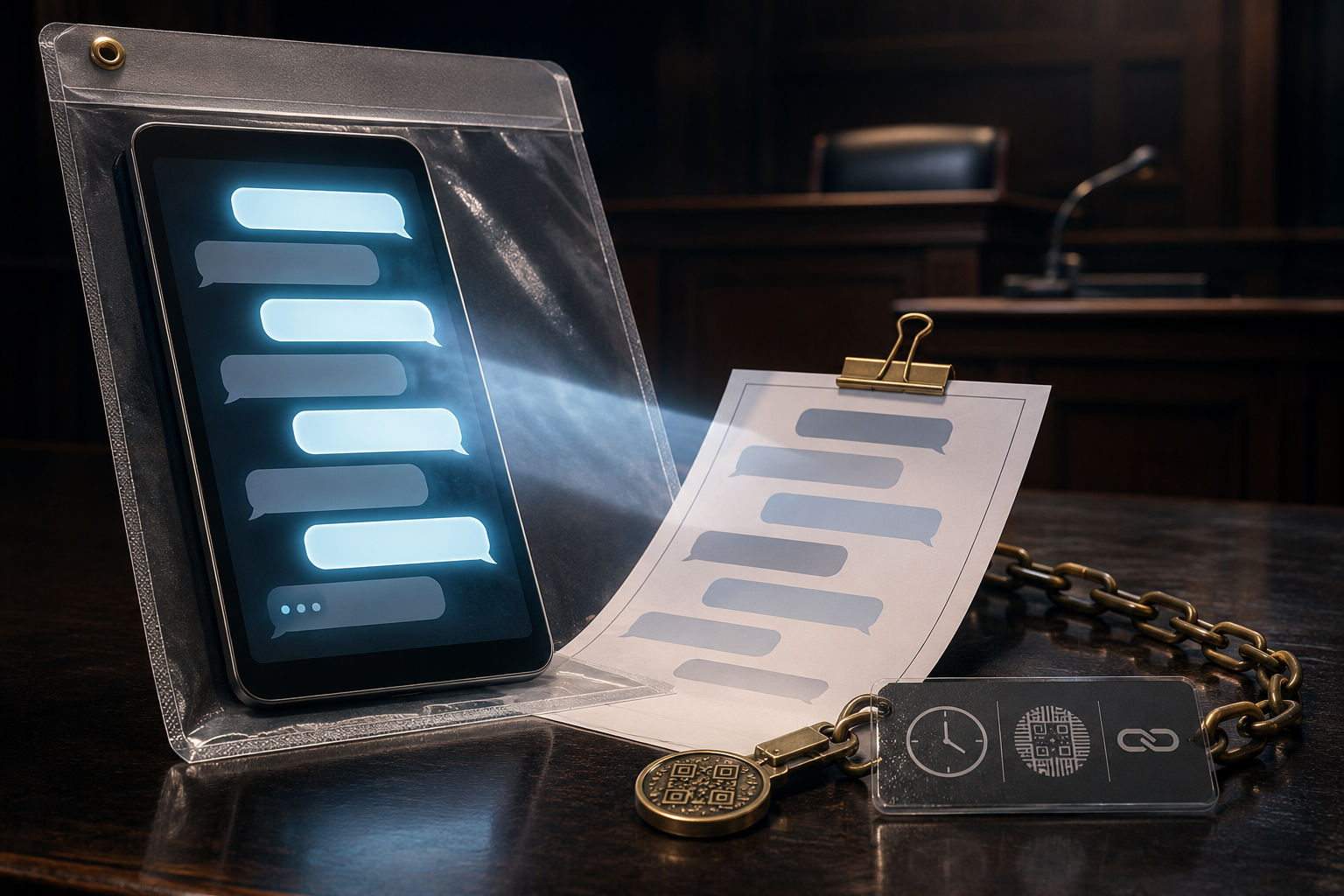 Yes, and it already has been, in a criminal arson trial and in a 250 million dollar business dispute, both in 2026. If you’ve ever typed something into ChatGPT that you wouldn’t want read aloud in a deposition, courts are now treating that conversation exactly the way they’d treat an email or a text message. Not private. Not protected. Fully discoverable.
For business owners, this isn’t an abstract technology story. It’s a direct warning about how you and your employees are using AI tools for anything touching contracts, disputes, or business decisions.
The Case That Should Worry Every Business Owner
In March 2026, the Delaware Court of Chancery issued an opinion finding that a CEO had followed guidance from ChatGPT in a way that led the company to breach a 500 million dollar acquisition agreement. The underlying deal involved a 250 million dollar earnout tied to revenue targets, and the CEO’s ChatGPT conversation records became central evidence in showing the company’s actions were a deliberate breach of contract rather than a good faith business judgment call.
Read that again. A chat log became the deciding factor in whether a court believed a business decision was made in good faith or in deliberate breach of a contract. The paper trail a CEO created by thinking out loud with an AI tool ended up doing more damage to the company’s legal position than almost anything a human employee could have written down.
Why This Isn’t Just a Tech Curiosity
This case is part of a much broader shift, not an isolated fluke. In a criminal case involving the Palisades wildfire, prosecutors obtained and used a defendant’s ChatGPT conversation logs to help establish premeditation, including a screen recording showing him asking the AI tool whether someone could be blamed for a fire started by a cigarette. It’s believed to be the first known instance of AI chat logs used as evidence in a criminal trial, and it will not be the last.
On the civil side, a federal court in the Southern District of New York ordered OpenAI to produce 20 million de-identified ChatGPT conversation logs as part of unrelated copyright litigation, establishing that these conversations are ordinary discoverable records, the same category as an email or a text message. Courts are treating AI chats as ordinary third party communications not privileged, preserved under litigation holds even after a user deletes them, and fair game once a discovery request is properly targeted at them.
There’s also a sharper warning buried in a separate federal case. A court found that documents generated through a public AI platform were not protected by attorney work product privilege, in part because the platform’s own terms of service permit disclosure to government authorities. Typing something into a consumer AI tool, even something that feels like private legal brainstorming, does not create the kind of protection you’d assume comes with talking to your own attorney.
What This Actually Means for Your Business
None of this means AI tools are too dangerous to use. It means you need to think about every substantive conversation with a consumer AI tool the way you’d think about writing an email, because that’s functionally what it has become in the eyes of a court.
A few things follow directly from these cases. Anything you or your employees discuss with a consumer AI tool about an active or anticipated dispute should be treated as a discoverable record, not a private sounding board, the same way you’d treat a text message about the same subject. Business decisions involving judgment calls, whether to walk away from a deal, how to interpret a contract term, how to respond to a dispute, should be documented and reasoned through your normal business channels, not worked out casually in an AI chat that could later read as evidence of your actual state of mind. If your business is facing or anticipating litigation, your litigation hold and discovery process now needs to account for AI conversations the same way it accounts for email and messaging platforms, since these logs are increasingly a category of records both sides expect to be searched. And deleting a conversation does not make it disappear. These platforms retain data as part of ordinary operations, and a deletion on your end doesn’t prevent a properly issued discovery request from reaching it through the provider directly.
The Bottom Line
ChatGPT and similar tools are not a private diary, and they are increasingly not even a private conversation. Courts in 2026 have already treated AI chat logs as evidence establishing criminal intent and as the deciding factor in a quarter billion dollar business dispute. If your business uses AI tools for anything involving contracts, disputes, or significant decisions, the smartest assumption is that anything typed into that conversation could end up printed out in front of a judge.
About George Bellas
George Bellas is a SuperLawyer business attorney at Bellas & Wachowski in Chicago, where he helps business owners understand how AI tools are reshaping litigation, discovery, and evidentiary risk. From advising clients on how AI conversations fit into litigation holds to helping businesses build practices that keep sensitive decision making out of unprotected AI chats, George works to make sure clients aren’t creating evidence against themselves without realizing it. If your business uses AI tools and you’re not certain how that intersects with your legal exposure, schedule a consultation with George Bellas today at 800.825.9260 or visit bellas-wachowski.com.