Articles Posted in Estate Planning

C0C54501-81B9-4A14-AC38-1A89563B3C05-300x200Most parents who put off estate planning aren’t avoiding the hard emotional part, thinking about their own mortality. They’re avoiding it because it feels like a project for someday, something to handle once things settle down. The problem is that the mistakes parents make in this area rarely show up as a single dramatic failure. They show up quietly, in documents that were never created, or created once and never updated, and the family only discovers the gap when it’s already too late to fix it the easy way.

Here are the mistakes I see most often, and what actually protects your kids instead.

1. Not Naming a Guardian for Your Minor Children

E3C8A54A-1AE3-4200-A5C6-026216596CB7-300x200There is a specific moment that changes everything for families caring for an aging parent, and most families do not realize they have already passed it until they need to act. It is the moment a parent loses the legal capacity to sign their own documents. Before that moment, planning is simple, calm, and entirely in your parent’s control. After it, the only path forward often runs through a courtroom.

This is the conversation most families put off, understandably. Nobody wants to sit across from a parent and talk about what happens if they can no longer make their own decisions. But the families who have this conversation early are the ones who get to avoid the version that plays out in front of a judge.

The Window Closes Quietly

0ED865D4-2044-49CD-B2CD-AA8A15390BF8-300x200Most estate plans were built around a picture of what a person owns that no longer matches how people actually live. A house, a car, a bank account, some furniture. But think about what’s actually sitting on your phone and in the cloud right now. Photos of your kids that only exist on your phone or in a cloud account. Years of email. A cryptocurrency wallet. A small online business or Etsy shop. Airline miles, streaming subscriptions, social media accounts your family will want to memorialize or shut down.

None of that fits neatly into a traditional will written for physical property, and if nobody has planned for it specifically, your family could find themselves locked out of things you fully intended for them to have.

Why “They’ll Just Log In” Doesn’t Work

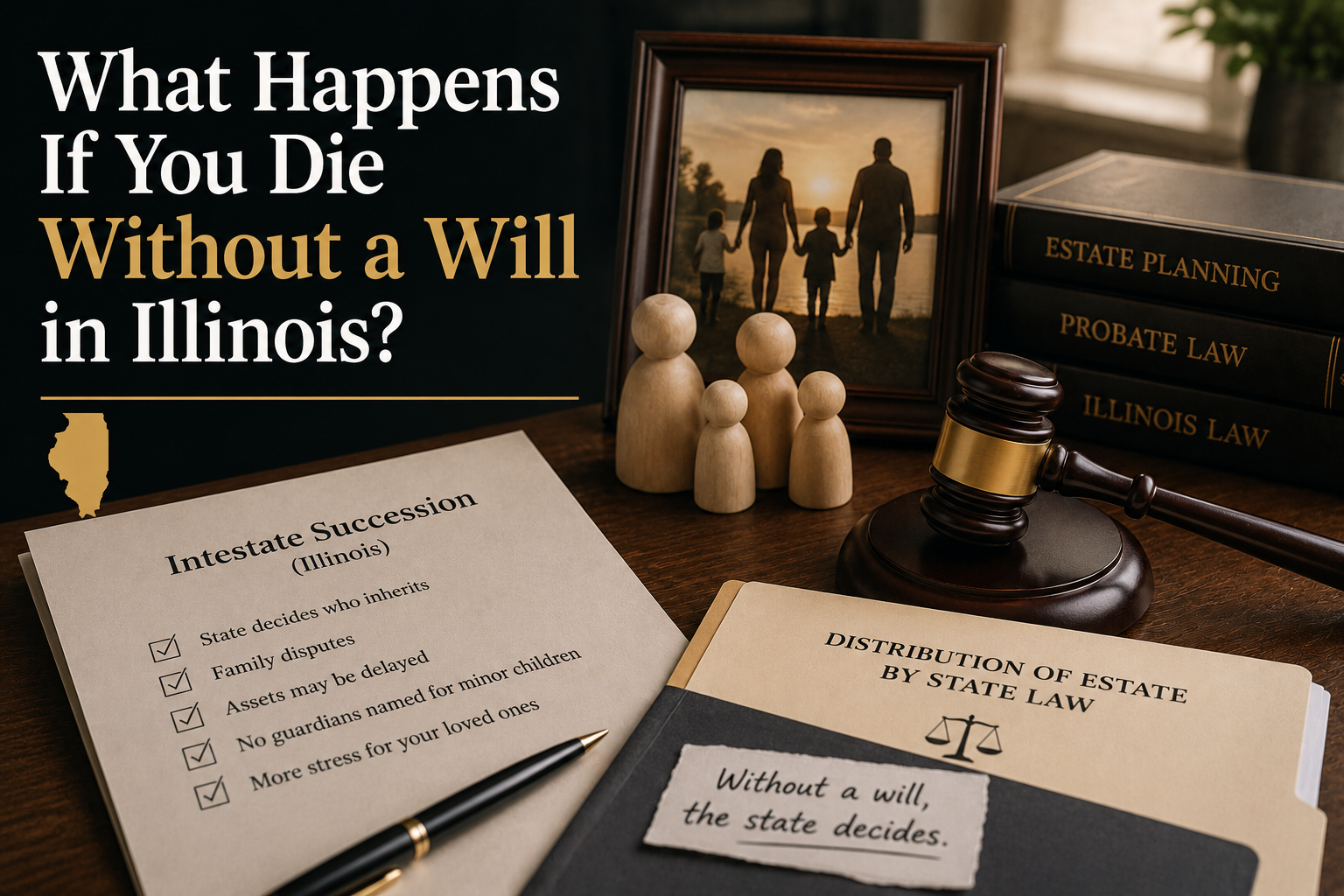
75871A27-039F-4B26-9C88-E2BD49334F25-300x200Most people assume their spouse or children will automatically inherit everything if they die without a will. In Illinois, that is only partially true.

If you die without a valid will, Illinois law decides who inherits your property. You lose the ability to choose who receives your assets, who manages your estate, who cares for your minor children, and how your family handles the probate process.

For some families, the result is straightforward. For others, it creates unexpected legal complications, delays, and conflict at an already difficult time.

Untitled-design-1-300x200Nobody plans for this conversation.

One day your parent is independent, managing their own finances, making their own decisions, living their own life. Then something shifts. Maybe gradually, maybe suddenly. A dementia diagnosis. A stroke. A fall that reveals how much has already changed without anyone saying it out loud.

And now you are the one who has to figure out what to do next.

303B4357-DD01-4E6F-829E-625E093D109E-300x200You did everything right.

You sat down with an attorney. You signed the documents. You made sure your spouse, or your adult child, or your trusted sibling knew where everything was kept. You told yourself your family would be protected if something happened to you.

Then something happened.

What-Illinois-Business-Owners-Should-Know-About-the-One-Big-Beautiful-Bill-Act-copy-300x300Illinois may soon see a major update to its Small Estate Affidavit process. On June 20, 2025, the Illinois General Assembly passed Senate Bill 83 and sent it to the Governor for consideration. The Governor has until August 19, 2025, to sign or veto the bill. Since

the General Assembly is currently out of session, failure to act by that date will result in an automatic veto.

Senate Bill 83, introduced by the Illinois State Bar Association’s Trusts and Estates Section Council, is designed to modernize and expand access to the Small Estate Affidavit, a tool that allows certain estates to bypass the formal probate process. Under

https://www.businessattorneychicago.com/files/2025/09/What-Illinois-Business-Owners-Should-Know-About-the-One-Big-Beautiful-Bill-Act.png-300x300.pngA new bill, Senate Bill 1667, has been sent to the Governor’s desk and could soon bring meaningful updates to the Illinois Trust Code. If signed into law, this legislation would create additional obligations for trustees, especially regarding document retention and the recovery of unclaimed trust assets. These proposed changes reflect a broader movement to modernize trust administration and promote long-term accountability.

At the heart of the bill are two key provisions. First, trustees would be required to keep a copy of the trust instrument for a minimum of seven years after the trust has terminated. This post-termination retention period helps preserve essential records that could become critical in the event of future questions, disputes, or beneficiary claims. Second, trustees would be obligated to conduct a reasonable search for any trust property that has been reported to the Illinois State Treasurer as unclaimed. This requirement is designed to ensure that assets do not slip through the cracks or go unclaimed due to administrative oversight.

Together, these changes aim to enhance transparency, reduce the likelihood of lost or forgotten property, and protect the interests of beneficiaries even after the trust’s formal duties have ended. As trust assets become increasingly diverse, and as more accounts

estate-300x251The recent deaths of Hollywood legend Gene Hackman and his wife of the past three decades, Betsy Arakawa, very close in time to one another have led to a potentially messy situation in which one of Hackman’s children might be contesting his will. The scenario highlights why it’s important that trust and estate documents account for all possible outcomes and give those you leave behind an unambiguous path to disbursing your assets.

Official reports appear to show that Arakawa died from the rare disease hantavirus and that Hackman—suffering from Alzheimer’s disease and likely not lucid enough to have called police about his wife’s death—passed away about a week later from cardiovascular disease.

Hackman’s 2005 Living Trust names Arakawa as his sole beneficiary for his $80 million estate, but since she appears to have died first, it’s not entirely clear what happens next. His daughters Leslie and Elizabeth and son Christopher are not named anywhere in the documents.

Guest Blogger: Attorney Tracy Ries

For parents going through a divorce, the right-now priority is to retain matrimonial attorneys to negotiate or litigate a plan to divide up assets, determine alimony and child support payments, and haggle over children’s residency and visitation schedules.

And it’s understandable that’s the top focus from a legal standpoint. But assuming you and your soon-to-be former spouse have, at some point, put into place estate planning documents—wills, trusts, powers-of-attorney, life insurance policies or anything else—you will want to revisit those ASAP.

Contact Information