Articles Tagged with Business Law

2FB66764-EA63-40A0-BC70-666BE8EA9BF1-300x200Yes. It has already happened, and the legal defense you might be counting on, “the AI said it, not us,” has already failed in court.

If your business uses any AI tool that talks to customers, drafts content, or answers questions, whether that’s a customer service chatbot, an AI powered search feature on your website, or a marketing team using generative AI to write copy, you need to understand that your business is legally responsible for what that tool says. Not the AI company that built it. You.

The Case That Should Change How You Think About This

7DE62A51-ECA7-4AE5-B3CA-D591C9F5A57C-300x200
Illinois has spent the last two years rewriting the rules on what employers and businesses are allowed to put in a contract. Most of the changes did not arrive as one big headline. They arrived quietly, amendment by amendment, and a lot of business owners are still operating on paperwork that was compliant when it was signed and is not compliant anymore.

Here is the uncomfortable part. Several of these changes carry deadlines landing right around January 1, 2027. If your contracts have not been reviewed since before this wave of legislation, you are not looking at a minor cleanup. You are looking at agreements that could be unenforceable, or worse, that could expose your business to penalties, attorneys’ fees, and Attorney General enforcement action. Here are the five contracts to get in front of before that date arrives.

Number 1: Non-Compete and Non-Solicitation Agreements

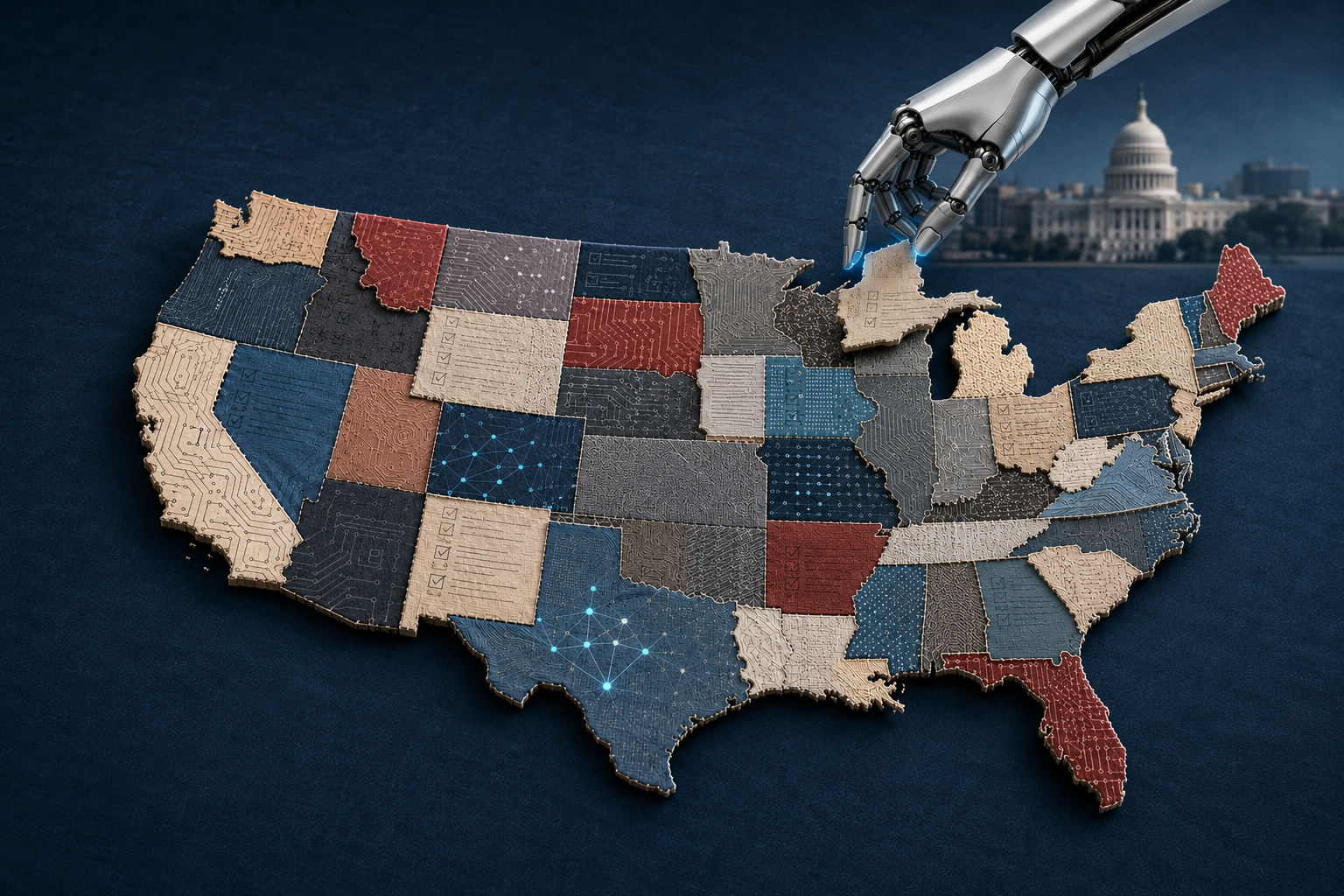
9CF03321-E485-4F10-A6D6-EBD9D619E9C0-300x200If you have been waiting for Washington to hand down one clear rulebook for how your business can use AI, stop waiting. It is not coming this year, and it may not be coming next year either.

Congress has not passed a comprehensive federal AI law. There is no single statute you can read to know what is required of your business. What exists instead is a fast growing collection of state laws, agency guidance, and executive orders that do not agree with each other, do not cover the same ground, and in some cases are actively fighting over who gets to regulate you at all. That is not a future risk. That is the actual legal environment your business is operating in right now, today, whether you have looked into it or not.

Why Everyone Assumed Federal Law Was Coming

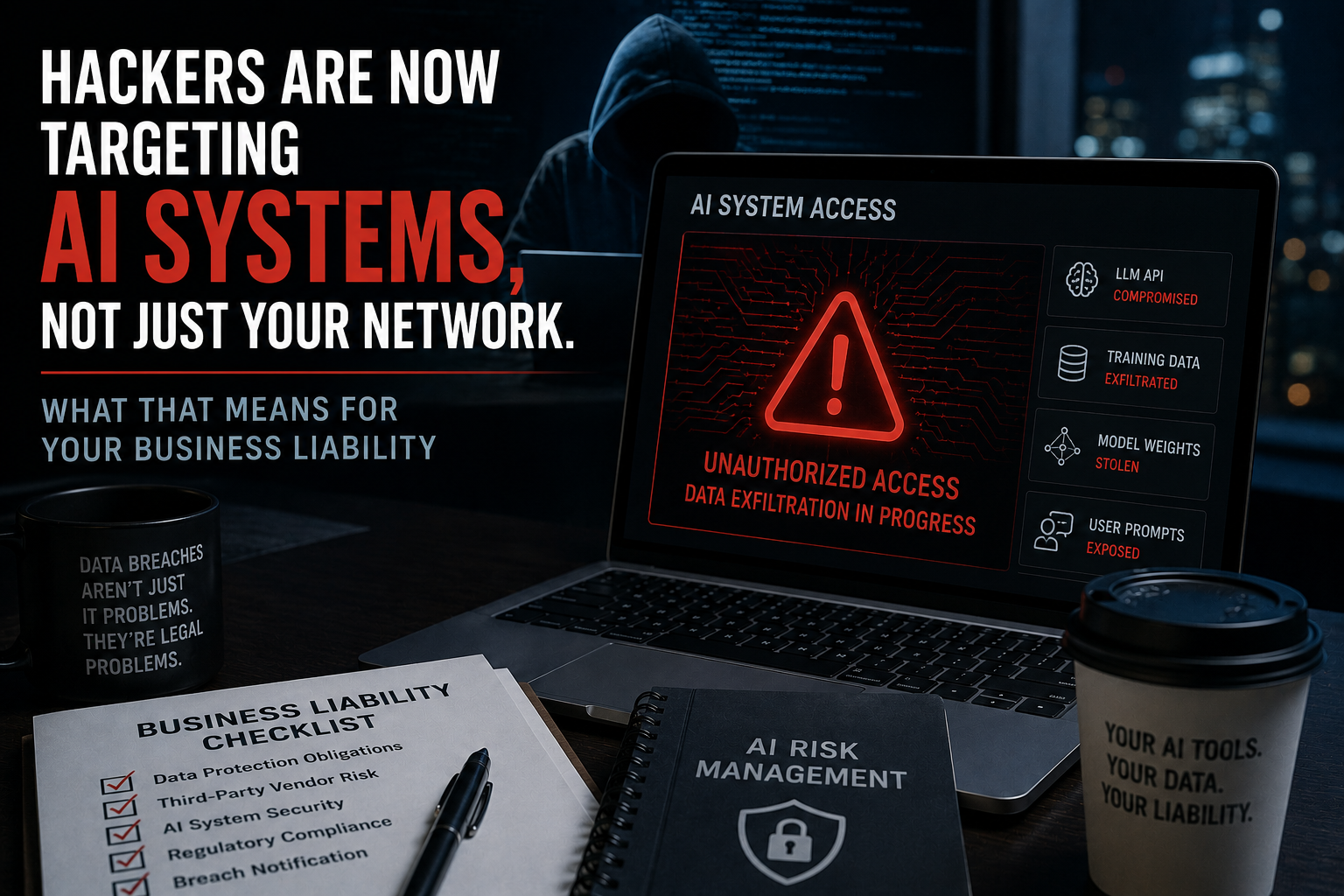
D5CD5B04-0609-4107-B18A-7A2E86931444-300x200For twenty years, “cybersecurity” meant one thing for most business owners: protect the network. Firewalls, endpoint protection, employee training on phishing emails. You knew what you were defending and you generally knew what your insurance covered if you failed.

That model is already out of date.

Attackers have shifted targets. Instead of only breaking into your servers, they are going after the AI tools your business now runs on: the chatbot on your website, the AI agent your vendor plugged into your CRM, the automated workflow that reads your inbox and drafts responses. And the legal and insurance world has not caught up to the speed of that shift, which means a lot of business owners are exposed in ways they do not know about yet.

1-condition-300x251

Conditional Gifts?

A recent decision by the Massachusetts Supreme Judicial Court has sparked interest across legal circles.  In a case centered around a $70,000 engagement ring, the court ruled that an engagement ring must be returned to the purchaser if the marriage does not take place, regardless of who may have been at fault. This ruling aligns Massachusetts with the majority of jurisdictions, where an engagement ring is considered a conditional gift—given with the expectation of marriage and thus, contingent upon the marriage actually happening.

While Illinois follows similar principles, this ruling offers a chance to examine how Illinois contract law views the conditional nature of engagement gifts and what factors courts might consider in similar cases.

Contact Information