Chicago Business Attorney Blog


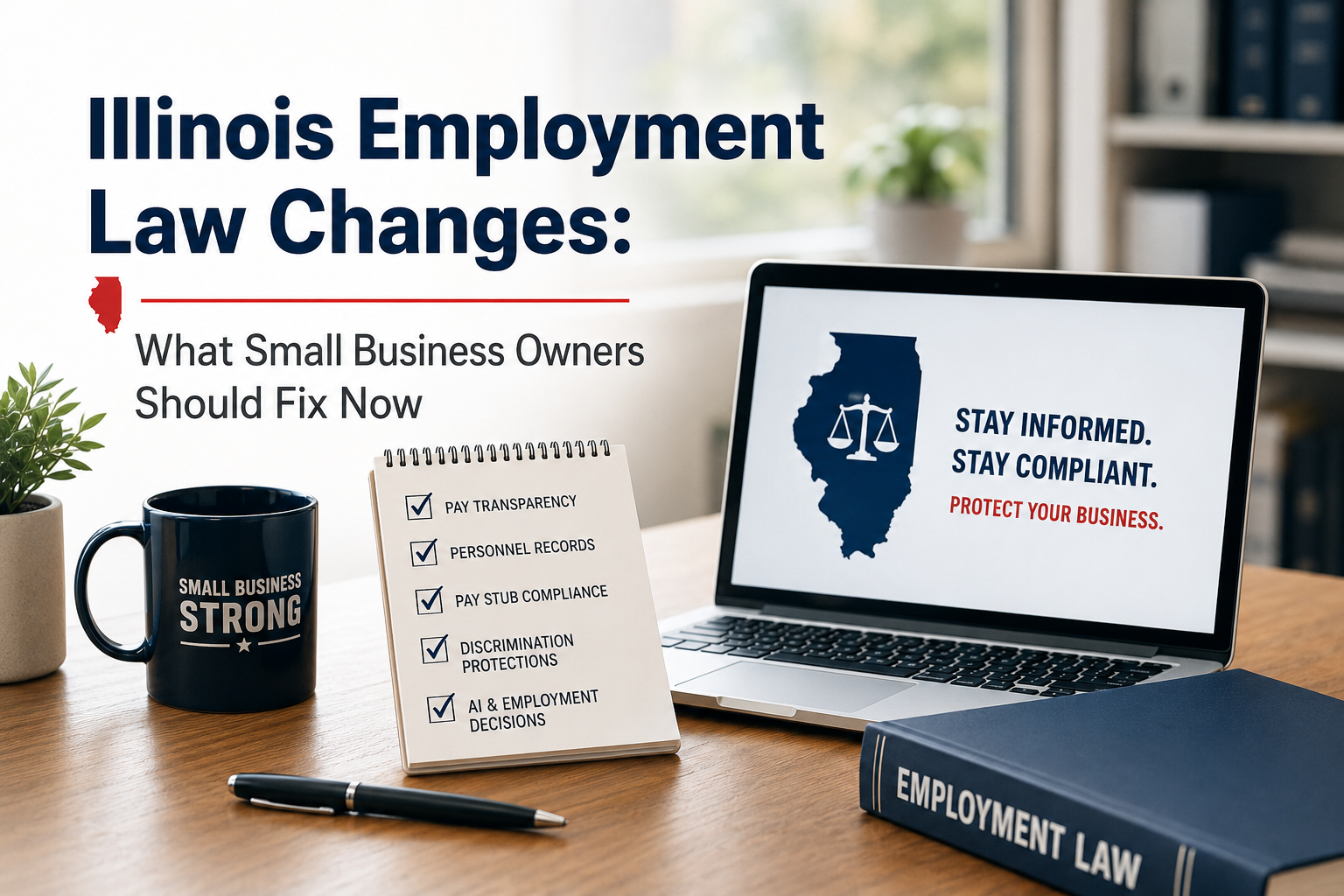 What changed? Illinois strengthened pay transparency mandates, expanded personnel file access rights, tightened pay stub requirements, broadened anti-discrimination protections to cover family responsibilities and reproductive health decisions, added restrictions on AI used in hiring, tightened severance and confidentiality agreement rules, and extended employee rights regarding employer-issued devices under VESSA, all effective in 2025–2026.
Who is affected? Most Illinois employers, particularly those with 15 or more employees, and any business that uses third-party recruiting tools, applicant tracking software, or staffing agencies.
What should you do now? Conduct a focused employment law audit covering job postings, payroll stubs, personnel file procedures, employee handbooks, AI-enabled vendor contracts, severance templates, and company-device policies.