George Bellas Business Attorney
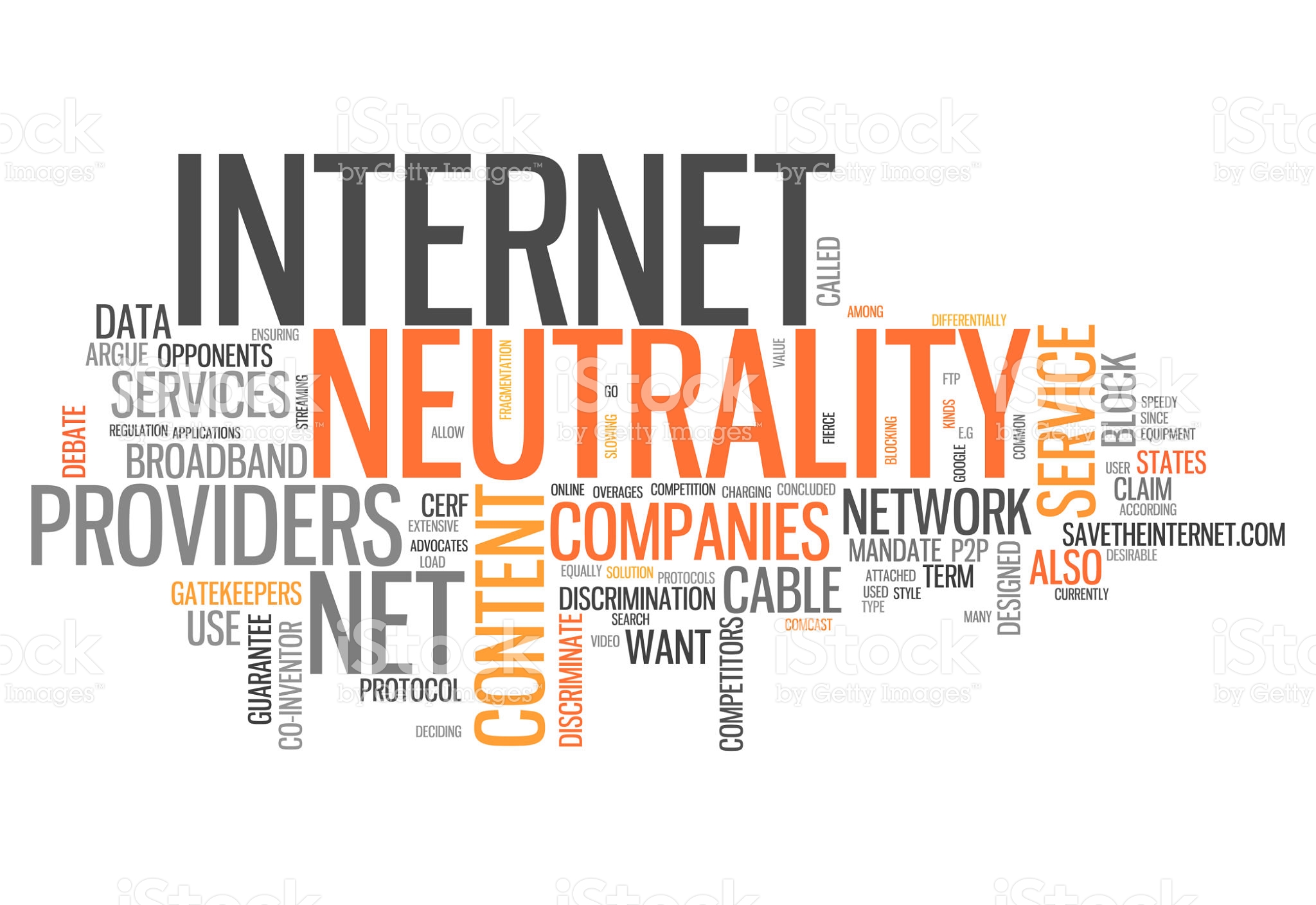
The Federal Communications Commission will vote December 14 on whether to repeal so-called “net neutrality” rules.  Those in favor of the current rules, established in 2015, say this would mean a playing field tilted toward those with money to pay Internet service providers for rapid content delivery speeds, giving them a fast lane to consumers’ desktops, tablets and phones.  What would that mean for small businesses?

The plan, put forth by current FCC Chairman Ajit Pai and supported in writing by the two other Republican appointees on the five-person commission—thus making its passage likely—would reverse the Obama era decision classifying Broadband Internet Access Service (BIAS) as a telecommunications service. Instead these providers—which include wired telephone companies, wireless carriers and cable television service providers—would be reclassified as offering information services.

The 2015 classification, which received a 3-2 affirmative vote in the then-Democratic-controlled FCC, was affirmed in June 2016 by the U.S. Courts of Appeals for the District of Columbia Circuit. In declaring broadband providers as telecommunications services, the FCC promulgated rules that stopped providers from blocking access to content and applications, slowing the speed with which users could access content, and charging fees to those willing to pay to have their content disseminated more rapidly.

The new iPhone X uses facial recognition instead of a thumb print.  That is cool, right?ransomware-300x211

Not so fast.  Facial recognition software is just one of a group of metrics that is referred to biometrics, which includes facial scans, fingerprints and iris scans and all verification or identification data excluding the individual’s name and demographics.   And there are serious privacy concerns with the use of this biometric data.

What makes this more interesting is that Illinois has a very strict law about the use of this data.   The Illinois Biometric Information Privacy Act was adopted in 2008 and requires companies using biometric data to get the consumer’s consent to use the data and to explain how it will be used and how long the data will be retained.  And, it gives consumers the right to sue the companies for using the biometric data.   It is this penalty which is promoting a number of suits that have been filed in Illinois regarding the use of the biometric data.

https://www.businessattorneychicago.com/files/2017/11/agreements11.1.17.jpg
Under a new Illinois law, non-compete agreements must be premised on a legitimate business interest and narrowly tailored in terms of time, activity, and place.  In addition, under the newly enacted Illinois Freedom to Work Act, employers are prohibited from entering into non-competes with employees who make less than $13/hour.

To prove the point, the Illinois Attorney General filed a suit in October against a payday loan company (Check Into Cash) because the employer required all store employees, including those making under $13 an hour, to agree to a one-year non-compete.  The suit alleges that the non-compete prohibits all store employees from working “directly or indirectly . . . as an employee, officer, consultant, or in any other capacity, for any individual, firm or entity, which provides deferred presentment, deferred deposit, and/or any other payday advance services, . . . and/or any other consumer lending services or https://www.businessattorneychicago.com/files/2017/11/11.1.17-1-300x150.jpgmoney services.”  The suit contends that the non-compete in question: (1) prohibits employees from working within 15 miles of any Check Into Cash location, not just the store the employee works in; (2) prohibits employees from working for any company that directly or indirectly provides consumer lending services, regardless of whether that company competes with Check Into Cash; (3) applies equally to all store employees, regardless of position or time spent with the company; and (4) applies to employees who make less than $13 an hour.  See: http://www.illinoisattorneygeneral.gov/pressroom/2017_10/20171025d.html

Employers should review their non-compete agreements to ensure compliance with Illinois law.  All restrictive covenants should: (1) be supported by adequate consideration; (2) narrowly tailored, in time, activity, and geography, to protect the employer’s legitimate business interests; and (3) not apply to low-wage employees as defined by the Freedom to Work Act.  If the employer is concerned about a low-wage employee’s exposure to trade secret information, they should also consider other means of protection, such as confidentiality agreements.

Can Student Loans Ever Be Discharged?

Yes, and there’s a new tool to help bankruptcy lawyers deter29905732 mine whether clients qualify

Contrary to common perception, not all student loans can be wiped out in bankruptcy court. Although the Bankruptcy Code does protect federal loans and some private loans from discharge, student loans can be discharged if the debtor can prove an “undue hardship,” which usually means you’re living in poverty and not likely to escape any time soon.

BIG WOES FOR ZILLO

download
Zillo, the gigantic online real-estate database company, has a gigantic headache, legally speaking. It is currently the target of a class action lawsuit in Illinois. Zillow is the website that allows a person to search for properties for sale–properties located just about anywhere. And Zillow’s cornerstone feature–Zestimate–allows one to look up the estimated value of a property–most any property, most anywhere, whether it is for sale or not.  (Your own home may well be listed there right now; just go to the site and put in your address.)

Lots of people love Zillo; it is free, comprehensive and convenient.   Its legal problems stem from its Zestimate feature.

CYBER-SECURITY–A VITAL PRECAUTION

cyber-security-website-image-300x133

It is time for businesses to give cyber-crime protection high priority; the sooner the better.  The mounting numbers of cyber-attacks on businesses are a serious threat to every sort of commercial enterprise.  Cyber intrusions have become really dangerous, sophisticated, and commonplace.

Businesses are attacked (whether they know it or not) on an average of 16,856 times a year, according to statistics compiled by IBM. That’s 46 attacks every business must deal with every day — or nearly two attacks an hour. Most of these–the vast majority of them–never get past a business’s firewall. But on average, about 1.7 attacks get through.

Are Threats on Social Media Protected Free Speech?internet_freedom_3-300x124

In our information age – the Age of Google, you might say – everybody knows that free speech is protected by the first amendment.  And many believe that one can say whatever one wants on social media.

THIS IS SIMPLY NOTE TRUE – and that is not an alternative fact!  Free speech does have limits, and threats to others are not protected speech.

2016 Tax Bills Coming Soon: Here’s What You Can Expect

The Cook County Clerk recently published 2016 property tax rates.  This is the final step in the billing process.  Second installment

tax201111-300x203
2016 tax bills will be mailed by the end of June and will be due on August 1, 2017.  Here are some notable facts that will affect this year’s tax bills.

DRIVERLESS CARS: THE FUTURE OF PRODUCT LIABILITY LITIGATION?201606_TE_CAR_090-header-300x225

 Any business that will contribute to the production of driverless vehicles must give serious thought to the risk of products-liability lawsuits. And that includes suppliers, even of minor parts. We may think of driverless cars as a phenomenon of the future, but that future is closer than you think.

“Driverless car” is generally defined as a vehicle which, for most of a journey, will take charge of steering, accelerating, indicating, and braking. For the near future, the technology is intended only to assist the driver, not to replace him. It is expected that the driver will be able to take control of the “driverless” vehicle at any time.

Are Employee Non-Compete Agreements Still Valid for Low-Level Employees? Non-Compete-Clause-e1417451038467-300x171

Non-compete arguments are staple in every Chicago Business Lawyer’s legal arsenal and a necessary to protect a business under certain circumstances.  A non-compete agreement, also known as a non-competition covenant or clause, is an agreement between an employer and an employee that places restrictions on the employee after the employment relationship ends.  Non-compete agreements can be useful tools for businesses that want to protect their investment in the training and development of their staff.  Typically, these agreements restrict former employees from working for certain competitors for a specified period of time.  Although Illinois courts tend to dislike non-competes, courts will enforce a non-compete agreement if drafted property.

When considering the enforceability of non-compete agreements, Illinois courts look to see if the agreement is reasonable and supported by adequate consideration.  In particular, when determining the reasonableness of a non-compete, the court considers whether the terms of the agreement are no more than what is required to protect the legitimate business interest of the employer, and narrowly tailored in terms of time, activity and place.